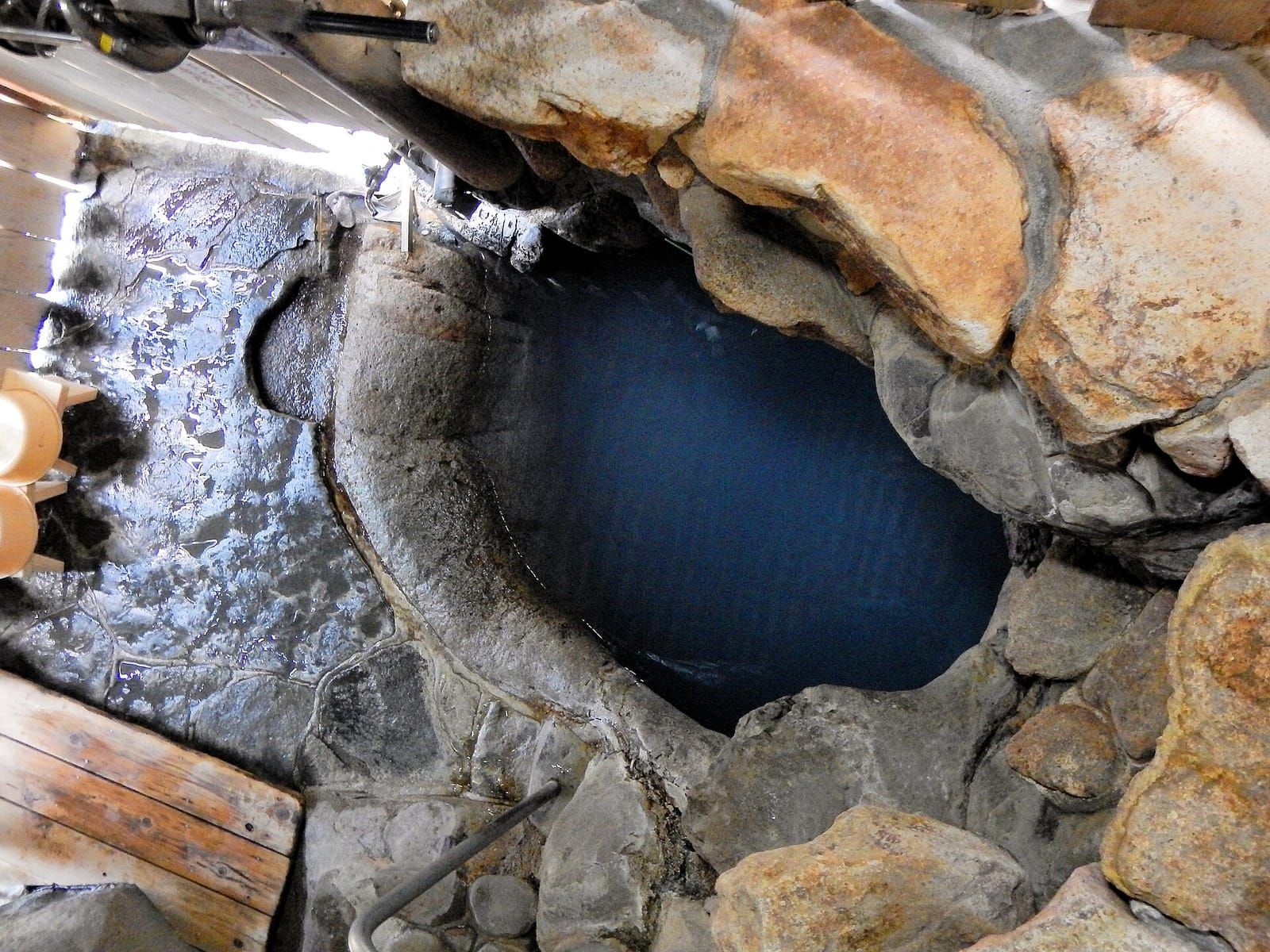
Yunomine Onsen is a single steep lane of inns folded into a mountain crease near Kumano Hongu Taisha, with a steaming creek running down the middle. Discovered about 1,800 years ago and said to be one of the oldest hot springs in Japan, it spent the last thousand of those years as the place where Kumano pilgrims boiled the road out of their bodies before approaching the grand shrine. In the middle of the creek sits a tiny wooden hut over a rock pool: Tsuboyu — a bath inscribed as part of a UNESCO World Heritage site, and one of the only World Heritage places on earth you can actually sit in. Here’s exactly how to do that.
What exactly is World Heritage here
Precision matters, because the claim gets garbled everywhere else: in 2004, UNESCO inscribed “Sacred Sites and Pilgrimage Routes in the Kii Mountain Range” — the Kumano shrines, Koyasan, Yoshino, and the pilgrimage trails linking them. Tsuboyu was included as the pilgrimage’s hot-water purification site (yugori — the ritual cleansing bath before worship at Hongu). So it’s not “the village is World Heritage”; it’s this specific stone tub, listed for what pilgrims did in it — and, per the Tanabe City Kumano Tourism Bureau, that makes it “one of the only hot springs you can bathe in that is registered as UNESCO World Heritage.”
How the 30-minute system works
The facts, per the Tanabe City Kumano Tourism Bureau and the Kumano Hongu Tourist Association official pages (checked 2026-09-16):
- Private rental: Tsuboyu is taken privately, in 30-minute slots — the pool genuinely fits about 1–2 people, so your group gets the hut to itself for the half hour.
- First-come, first-served — no reservations. Buy a ticket from the vending machine at the Yunomine public bathhouse, exchange it for a number card at the counter, and wait your turn.
- Hours: 6:00–21:00 (reception closes 20:30), open year-round.
- Price: ¥800 adults, ¥400 under 12 — and the ticket also includes one soak in the public bathhouse (regular bath or the concentrated “medicine bath”) afterward.
- Rules: no swimsuits, no soap, no shampoo — this is a plain hot soak in a protected monument, not a wash.
- The water: milky, mineral-heavy, and said to change color up to seven times in a day depending on light and conditions.
The half hour is the right length. You climb down into a hut barely bigger than the tub, sit in cloudy blue-white water that wells up through the rocks beneath you, and listen to the creek — the same bath, functionally unchanged, that medieval pilgrims used as the final ritual before Hongu.
 The famously opaque water — officially “said to change color seven times over the course of a day.” Photo: Nekosuki / Wikimedia Commons, CC BY-SA 4.0

Because it’s first-come from 6:00 with no way to book ahead, the queue math is structural: the only way to be at the counter when reception opens is to wake up in the village — anyone day-tripping has to get here first, and Yunomine’s inns stand a short walk from the bathhouse. Browse Yunomine Onsen stays on Booking.com for your dates. (Accommodation links on Beyond Kansai are monetized via Stay22 — a booking may earn us a small commission at no extra cost to you. Disclosure.)
The yuzutsu: cook your breakfast in the spring
Mid-village, beside the creek, is the yuzutsu — a public cooking basin where 90°C spring water comes out hot enough to slow-cook food. Local shops sell eggs and vegetables for exactly this purpose: drop them in a net bag, lower them into the spout, and pull out onsen tamago a few minutes later. It runs the same 6:00–21:00 day as the baths, and it’s the cheapest World-Heritage-adjacent breakfast in Japan.
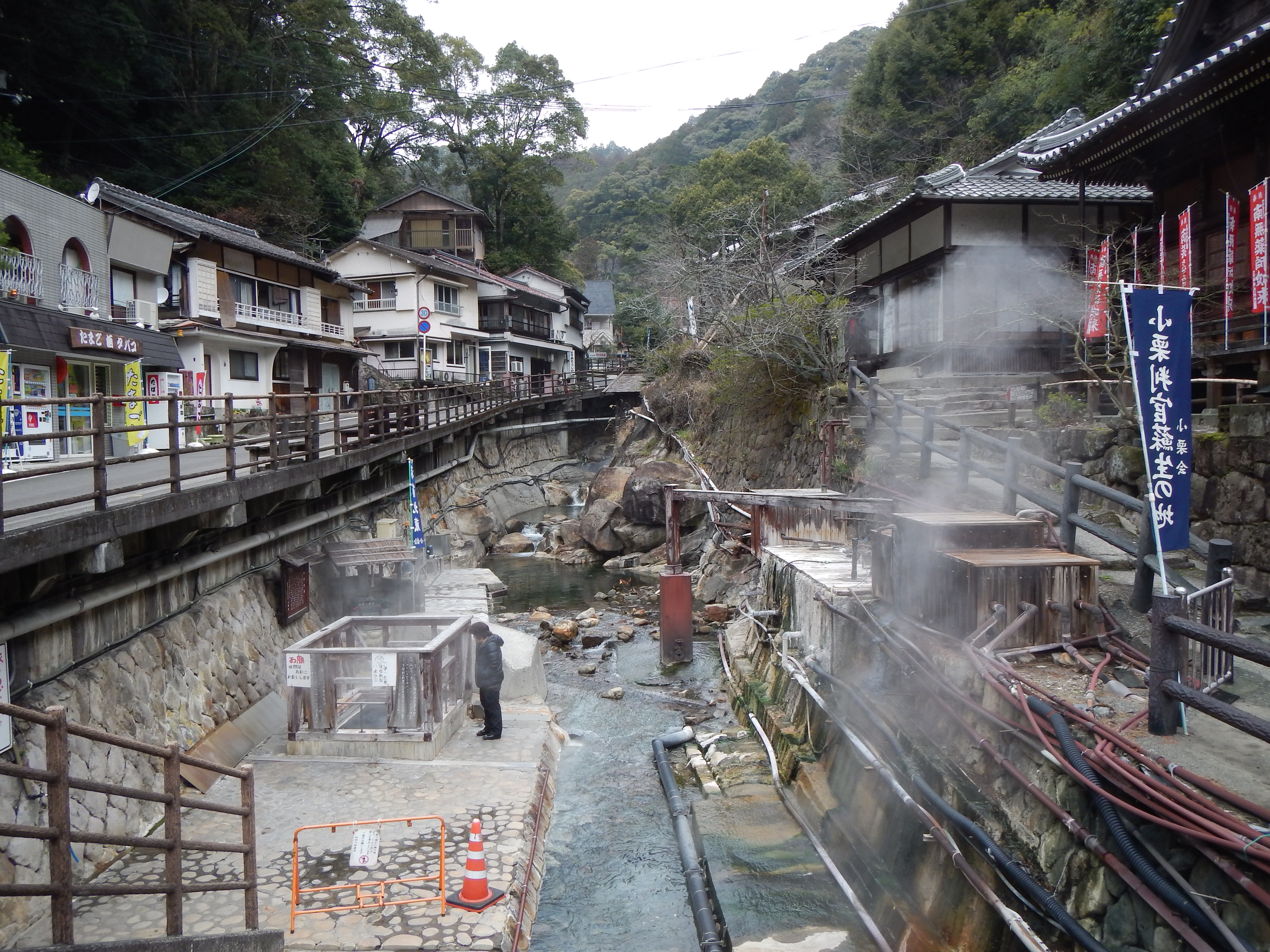 The whole village in one frame: the steaming Yunotani creek, the yuzutsu cooking area, and inns stacked along the lane. Photo: Nekosuki / Wikimedia Commons, CC BY-SA 4.0

The winter pair: Yunomine × Kawayu
Ten minutes away by road is Yunomine’s opposite number, Kawayu Onsen — where the river itself is the bath. Every December–February Kawayu digs its giant open-air Sennin-buro into the riverbed, free and swimsuit-friendly. The two villages are the classic “two great baths of winter Kumano” pairing: Tsuboyu is small, ancient, private, and ritual; the Sennin-buro is enormous, communal, and half swimming-hole. A night in each covers both ends of what a hot spring can be — compare Kawayu stays on Booking.com alongside Yunomine and split the difference. (Same disclosure as above.)
Getting here — riding in or walking in
By transit, Yunomine follows the standard Hongu-valley pattern: the Kuroshio express from Osaka to Kii-Tanabe, then the valley bus — Yunomine Onsen has its own stop. On foot, this village is the traditional finish line: the Dainichi-goe section of the Kumano Kodo crosses the ridge from Kumano Hongu Taisha directly into Yunomine — about 2 km, 1–2 hours, short but steep (per the tourism bureau’s route page). Walkers on the multi-day Nakahechi have used that descent-into-hot-water arrival for centuries, and it remains the single best way to enter an onsen town anywhere in Japan.
Recommended · SafetyWing
SafetyWing Nomad Insurance
Multi-day walking on steep, remote terrain is exactly the context where travel medical cover earns its keep — flexible monthly coverage with claims in English.
Check SafetyWing plans →Affiliate link — a small commission may go to Beyond Kansai at no extra cost to you. Disclosure.
Quick FAQ
- Can you really bathe in a World Heritage site? Yes — Tsuboyu was inscribed in 2004 as part of “Sacred Sites and Pilgrimage Routes in the Kii Mountain Range,” as the pilgrimage’s purification bath, and it remains in daily use (¥800, 30-minute private slots).
- How do I get a slot? First-come only, no reservations: ticket machine at the public bathhouse, swap for a number card at the counter, wait your turn. Reception 6:00–20:30, bathing until 21:00, year-round.
- How long is the wait? It depends entirely on the day — one tub, 30 minutes per group. Staying overnight in the village and going at opening is the structural fix — no reservation system exists to beat.
- Swimsuits? No — unlike Kawayu’s Sennin-buro, Tsuboyu is a normal Japanese bath: no swimwear, no soap, no shampoo.
- Is Yunomine really Japan’s oldest hot spring? It’s said to be — the official line is “discovered about 1,800 years ago” and “thought to be one of the oldest in Japan.” Nobody was issuing certificates in the 4th century, so treat “oldest” as tradition rather than a measurement.
Editor’s note
This guide makes no personal-experience claims about bathing here — Yunomine and the Hongu valley fall within our editor’s home-region coverage (about), but every operational fact above comes from official sources. Tsuboyu’s 30-minute private system, first-come ticket-and-number-card process, 6:00–21:00 hours (reception 20:30), ¥800/¥400 prices, included public-bathhouse soak, no-swimsuit rule, the 1,800-year discovery tradition, the “seven color changes” phrasing, the 90°C yuzutsu and 6:00–21:00 cooking hours, and the Dainichi-goe route data (2 km, 1–2 hr, Hongu→Yunomine) were checked against the Tanabe City Kumano Tourism Bureau and Kumano Hongu Tourist Association official pages on 2026-09-16. The World Heritage inscription (2004, as the pilgrimage’s yugori purification site) follows the official wording; prices and hours can change — check locally. Drafted with AI assistance and editor-verified.
Sources
- Yunomine Onsen & Tsuboyu — Tanabe City Kumano Tourism Bureau official (1,800-year tradition, World Heritage bathing claim, 30-min private use, ticket system, 6:00–21:00 / reception 20:30, ¥800/¥400, public-bath prices, no-swimsuit rule, seven-color phrasing, yuzutsu; retrieved 2026-09-16)
- Tsuboyu — Kumano Hongu Tourist Association official (30-minute rotation, number card at the bathhouse counter, included public-bath entry, yugori World Heritage registration; retrieved 2026-09-16)
- Yunomine Onsen — Kumano Hongu Tourist Association official (開湯1,800年 tradition, 90°C yuzutsu 6:00–21:00, eggs/vegetables at local shops; retrieved 2026-09-16)
- World Heritage — Tanabe City Kumano Tourism Bureau official (“Sacred Sites and Pilgrimage Routes in the Kii Mountain Range,” inscribed 2004; retrieved 2026-09-16)
- Dainichi-goe — Tanabe City Kumano Tourism Bureau official (Hongu Taisha↔Yunomine, ~2 km, 1–2 hr, steep; retrieved 2026-09-16)
- Kawayu Onsen & the Sennin-buro — Beyond Kansai (the winter pairing)