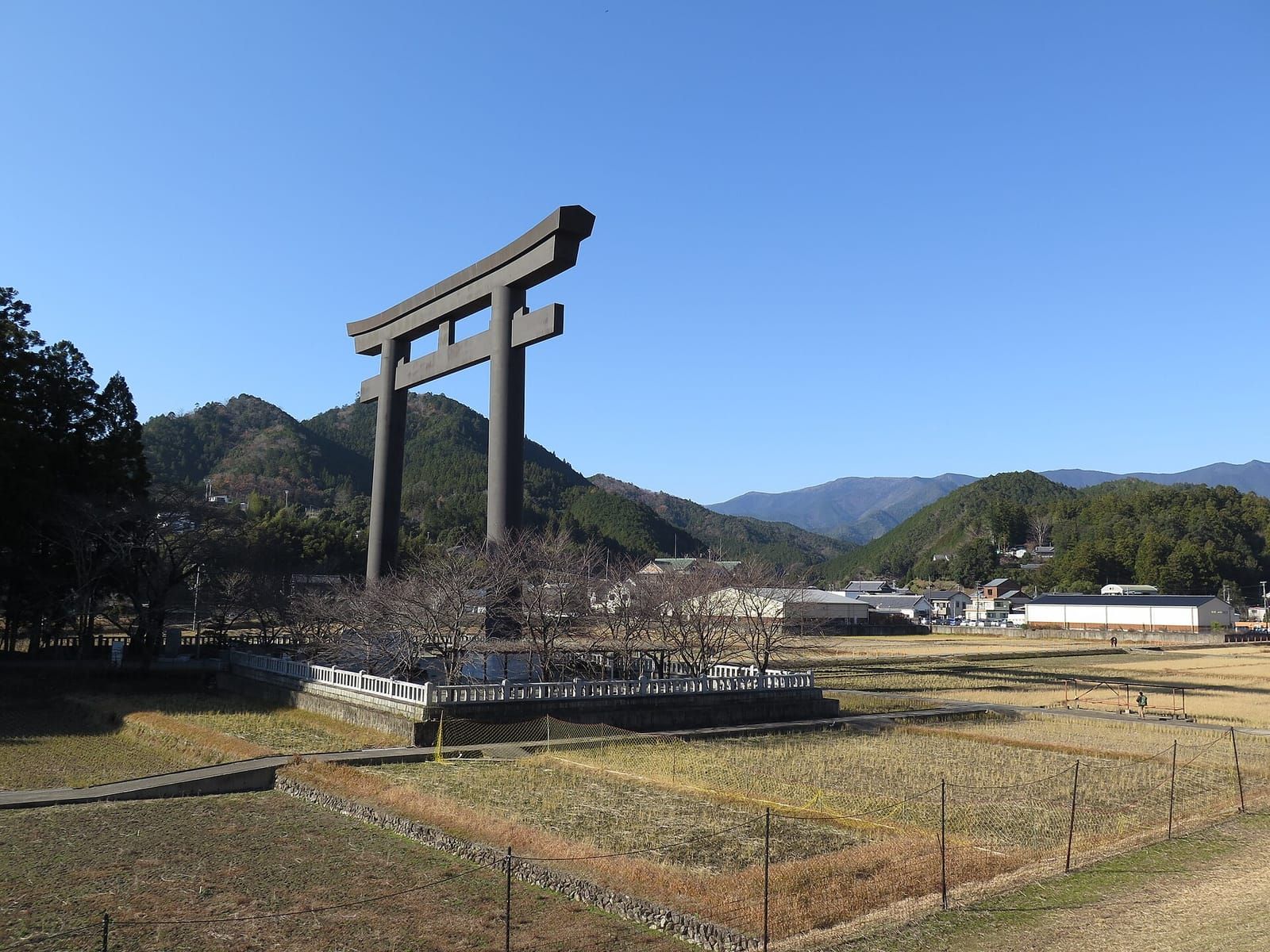
Kumano Hongu Taisha — the spiritual hub of the Kumano Kodo pilgrimage — sits deep in the mountains of the Kii Peninsula, and the onsen villages beside it (Kawayu and Yunomine) are where walkers and non-walkers alike sleep. There is no train to any of them. The pattern from Osaka is fixed: ride the rail line to the coast, then ride a bus up the valley. It’s straightforward — but the buses are infrequent enough that the timetable, not the route, is what you actually plan around.
Osaka → Hongu & Kawayu at a glance
| Route | How | Total time | Notes |
|---|---|---|---|
| 1. Train + valley bus | Ltd. Express Kuroshio to Kii-Tanabe (~2.5 h) + bus up the Nakahechi valley (roughly 2 h) | ~4.5–5 h | The standard route; buses are infrequent — match your train to a bus |
| 2. Car | Expressway to Tanabe, then the mountain road up the valley | varies | The flexible option; also the fallback when bus times don’t fit |
Fares change and the valley buses run to a sparse schedule — check the latest timetable and fares on the operators’ official pages before you commit to a connection.
Step 1 — Osaka to Kii-Tanabe by rail
The Limited Express Kuroshio runs from Shin-Osaka and Tennoji down the coast; Kii-Tanabe, about 2.5 hours out, is the gateway station for the whole Hongu corridor. Reserve seats on weekends and holidays. If this trip is part of a bigger Kansai loop, note the Kuroshio is one of the trains covered by the Kansai WIDE Area Pass — the math works if you’re doing another long leg the same week.
Step 2 — The bus up the Nakahechi valley
From the stop outside Kii-Tanabe Station, buses climb the Nakahechi valley toward Hongu — the same corridor the pilgrimage route follows. Expect roughly two hours to the Hongu area, passing Takijiri (the classic trailhead) on the way; the onsen villages of Yunomine and Kawayu are stops shortly before/around Hongu, so you can ride straight to your inn. Two planning realities:
- Departures are few. This is rural Wakayama — a handful of buses a day, not a metro. Pick your bus first, then choose the train that meets it; check the current timetable before travel.
- The last stretch of the day matters. If you’re walking the Hosshinmon-oji taster or a full Nakahechi stage, the same bus line parallels the trail, so you can shorten any day — carry the timetable.

Where to sleep: Kawayu vs Yunomine vs Hongu
- Kawayu Onsen: the river-bed hot spring village — inns line a river you can literally dig a bath in, and in winter the village digs the giant Sennin-buro river bath (our full Kawayu guide). The roomiest choice of the three.
- Yunomine Onsen: the ancient, tiny one — a steep lane of inns around a hot-spring stream, with the World-Heritage-listed Tsuboyu bath. Book early; it’s small.
- Hongu village: closest to the shrine and the Oyunohara torii, with a handful of lodgings.
All three are bookable online — browse Hongu, Kawayu and Yunomine stays on Booking.com for what’s open on your dates, and compare with the local Kumano Travel community reservation system, which lists small inns that never appear on the big platforms. (Pairing Kumano with Koyasan on the same trip? The other classic Wakayama night is a temple stay on the mountain — our shukubō comparison.) (Accommodation links on Beyond Kansai are monetized via Stay22 — a booking may earn us a small commission at no extra cost to you. Disclosure.)
Driving instead
A car turns the fixed timetable problem into a non-problem and opens the whole interior — the expressway runs to the Tanabe area, then a mountain road follows the valley up. It’s the right call if you’re combining Hongu with the wild coast or traveling as a group; it’s the wrong call if you plan to walk a one-way stage of the Kodo (the bus is your return leg — a parked car anchors you).

Quick FAQ
- How long does it take from Osaka to Kumano Hongu? Plan on 4.5–5 hours door to door: ~2.5 hours on the Kuroshio to Kii-Tanabe, plus roughly 2 hours on the valley bus — and possibly a wait between them, since buses are infrequent.
- Is there a direct train or bus from Osaka to Hongu? No regular direct service — everyone changes at Kii-Tanabe (rail → bus). Check the operators’ pages for any seasonal expresses before you travel, but build your plan around the change.
- Train + bus, or car — which is better? Doing the classic one-way walk, or staying two nights in one onsen village: train + bus works well. Touring multiple villages, the coast, or traveling with luggage for a group: car. Either way, the money on this route is small-town cash country — our money guide covers the yen-on-hand rule.
- Kawayu or Yunomine? Kawayu for space and the river baths, Yunomine for atmosphere and history. Both connect to Hongu by the same bus line — details in our day-by-day Nakahechi guide.
Editor’s note
This access guide assembles route facts already verified across our Kumano coverage — the Kuroshio’s Shin-Osaka/Tennoji–Kii-Tanabe run and ~2.5-hour duration, the bus corridor up the Nakahechi with its trailhead stops, and the character of the onsen villages were checked against official operator and tourism-bureau pages for our Kumano Kodo guides (2026-07 checks). Exact bus times and fares are deliberately not quoted here because the sparse timetable changes — always confirm on the official pages below. First-person notes are within our editor’s home region (about). Drafted with AI assistance and editor-verified.
Sources
- Kumano Kodo Nakahechi access & bus corridor — Tanabe City Kumano Tourism Bureau (official)
- Kumano Travel — community reservation system (official, small-inn listings)
- Walking the Kumano Kodo — Beyond Kansai (gateway, durations)
- Kumano Kodo Nakahechi day by day — Beyond Kansai (bus-parallel trail, villages)