Type “Kumano Kodo winter” into a search box and you’ll find a lot of hedging. Here’s the direct version, from the region’s own tourism bureau: yes, you can walk the Kumano Kodo in winter — the Nakahechi route is open year-round — and the pilgrimage’s most spectacular bath only exists in winter. The real questions are narrower: which route, how you manage the short days, and what you do about the cold. This guide answers those, then makes the case that December–February is the connoisseur’s season.
First, the route answer
Per the Tanabe City Kumano Tourism Bureau (official winter guidance, checked 2026-10-02):
- Nakahechi — open year-round. The classic Takijiri → Hongu pilgrimage line keeps operating: the trail and the inn network continue through winter. This is the route this article assumes; our day-by-day guide covers the stages.
- Kohechi — closed in winter. The high mountain route between Koyasan and Hongu shuts for the season. If your plan was to walk off the mountain from a temple stay, winter says no — take the transport link instead.
- Climate reality: the southern Kii Peninsula is the mild corner of Japan — the bureau notes it hardly snows and coastal temperatures stay above freezing. But the Nakahechi crosses passes, and cold snaps can frost or dust them — this is “walkable with sense,” not “tropical.”
What winter actually changes
- Daylight is the real constraint. The bureau’s winter guidance leads with it: shorter days make time management essential. Start stages early, know your sunset time, and shorten ambitious days — the bus line that parallels the trail (the escape hatch in our Nakahechi guide) is exactly for this.
- Buses may thin out. The bureau states some buses run limited schedules or not at all in winter — check current timetables when you plan, and don’t build a day around an unverified connection.
- Some inns close for the off-season. The flip side, per the same guidance: with fewer walkers, your first-choice lodging is often easier to book than in the October crush. Book ahead anyway — the villages are small.
- Gear is ordinary, not alpine: the bureau’s list is an extra warm layer (fleece or merino), a light down or shell, beanie, gloves and warm socks. No crampons, no winter-mountain kit — just respect for icy patches on shaded morning passes.
What winter gives back
Quiet, first. The bureau’s own phrasing is “a fuller quietude on the trail” — the evergreen forest stays green, the lookouts sharpen in cold air, and from late January ume blossoms speckle the villages white.
Then the baths. This is the argument that ends the debate:
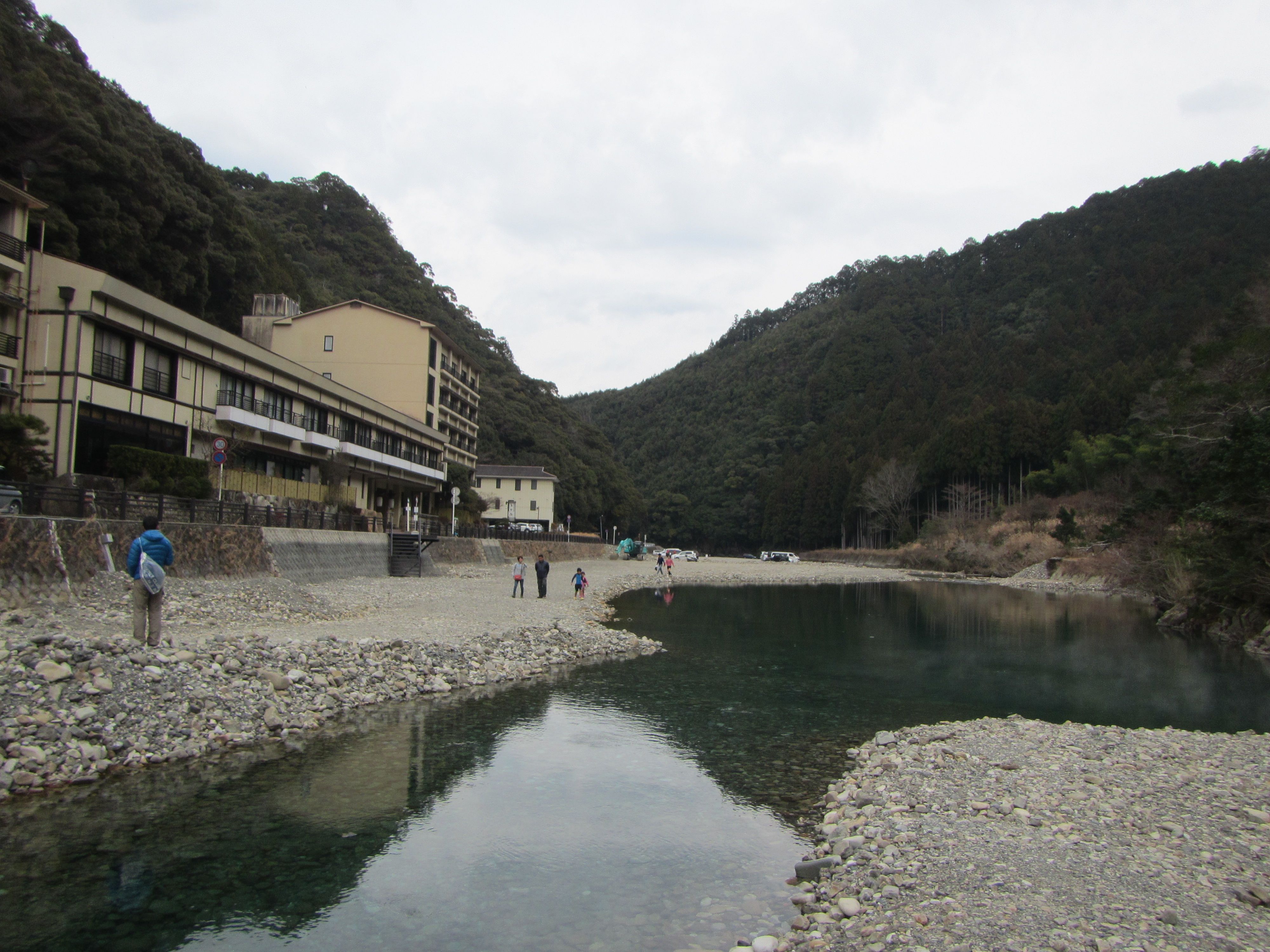
- The Sennin-buro at Kawayu — winter only. From December through February the village digs its giant open-air bath straight into the hot-spring river: roughly 40 × 15 meters, free, 6:30–22:00, swimsuits fine (official bureau facts — our full Sennin-buro guide has the details). You cannot do this in the season everyone else walks.
- Tsuboyu at Yunomine — the World-Heritage-listed two-person boulder bath — is at its best when the air bites (our Tsuboyu guide).
- Both villages sit right on the route, so a winter itinerary writes itself: walk short, soak long. (Kansai’s wider winter-bath circuit is in our winter onsen hub.)
Browse Kawayu Onsen stays on Booking.com for the Sennin-buro season, or Yunomine Onsen for Tsuboyu at the doorstep — the classic pattern is a night in each. (Accommodation links on Beyond Kansai are monetized via Stay22 — a booking may earn us a small commission at no extra cost to you. Disclosure.)
 The winter reward: Kawayu’s river steams at 73°C from the gravel — in Sennin-buro season, the river is the bath. Photo: Nekosuki / Wikimedia Commons, CC BY-SA 4.0

The safety margin
Winter walking is less forgiving of the ordinary mistakes — a late start, a missed bus, a twisted ankle an hour from the road. Carry the timetable, tell your inn your route, and carry insurance that actually covers trail mishaps abroad:
Recommended · SafetyWing
SafetyWing Nomad Insurance
We carry SafetyWing Nomad Insurance on trail days — travel medical cover built for people moving between countries, bought online even mid-trip. Check what it covers for hiking before you walk.
Check SafetyWing plans →Affiliate link — a small commission may go to Beyond Kansai at no extra cost to you. Disclosure.
 Tsuboyu: the two-person World-Heritage bath at Yunomine — winter’s other prize, one hill over from Kawayu. Photo: Nekosuki / Wikimedia Commons, CC BY-SA 4.0

Quick FAQ
- Can you walk the Kumano Kodo in December or January? Yes — the Nakahechi route is open year-round, per the Tanabe City Kumano Tourism Bureau (checked 2026-10-02); winter needs early starts and ordinary cold-weather layers, not mountaineering gear. The Kohechi (Koyasan–Hongu) is closed in winter.
- Is there snow on the Kumano Kodo in winter? Usually little — the bureau describes the southern peninsula as mild with hardly any snow, though passes can catch frost or a dusting in cold snaps. Watch icy shaded sections on early-morning descents.
- Why walk it in winter at all? The trail at its quietest, clear cold-air views, late-January ume blossoms — and the Sennin-buro river bath at Kawayu exists only December–February, making winter the one season the pilgrimage ends in a bath dug into a river.
- Are the inns and buses running? Inns: mostly yes, though some close off-season — winter actually makes first choices easier to book. Buses: some run limited winter schedules or pause entirely, so verify the current timetable before fixing a one-way walking day.
- What should I pack? The bureau’s winter list: an extra warm layer (fleece/merino), light down or shell, beanie, gloves, warm socks — plus a headlamp for the short days and the usual rain shell this coast demands year-round.
Editor’s note
The Kumano valleys are within our editor’s home-region coverage (about), but this winter guide quotes institutions, not memory. Checked 2026-10-02 (Tanabe City Kumano Tourism Bureau official winter guidance): the Nakahechi’s year-round operation, the Kohechi’s winter closure, the mild/low-snow character of the southern peninsula, shorter-daylight time management, the winter gear list, off-season lodging closures alongside easier first-choice booking, limited or suspended winter bus schedules, trail quietude and late-January–early-February ume. Sennin-buro facts (December–February, 6:30–22:00, free, ~40×15 m, swimsuits) were checked against the bureau’s Kawayu page on 2026-09-09 for our dedicated guide; each winter’s opening is condition-dependent — confirm locally in heavy rain or high water. Exact bus timetables change seasonally — always check current schedules before travel. Drafted with AI assistance and editor-verified.
Sources
- Visiting the Kumano Kodo in winter — Tanabe City Kumano Tourism Bureau official (routes, daylight, gear, buses, lodging; retrieved 2026-10-02)
- Kawayu Onsen — tourism bureau official (Sennin-buro season & facts; retrieved 2026-09-09)
- Kumano Kodo Nakahechi day by day — Beyond Kansai (stages, bus escape hatches)
- Kawayu Onsen & the Sennin-buro — Beyond Kansai (the winter bath in full)