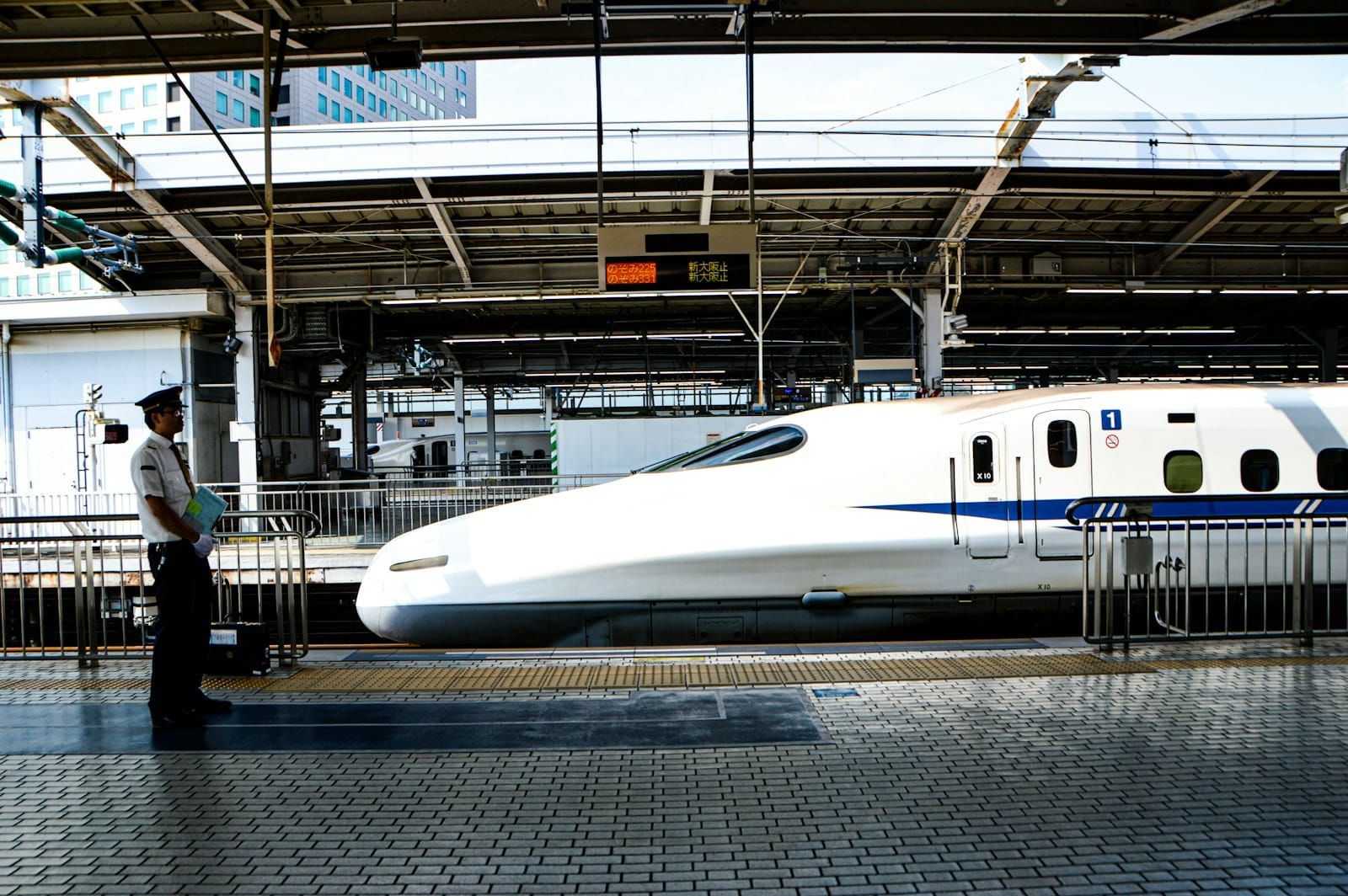
Here’s the short version: the Kansai WIDE Area Pass costs ¥12,000 for 5 consecutive days (child 6–11: ¥6,000), and it covers exactly the trains that make day-trip math painful in this region — the limited expresses to Kinosaki Onsen and Shirahama, the Haruka airport express, and even the Sanyo Shinkansen between Shin-Osaka and Okayama. If your plan is to sleep in Osaka or Kyoto and never leave the city center, skip it. If your plan looks anything like ours — out to the coast, the onsen towns, the places this site exists for — it’s one of the easiest yeses in Japanese rail.
The one-line rule of thumb: count your long-distance legs. Two or more limited-express or shinkansen rides in a 5-day window and the pass almost certainly wins; one, and you should run your exact route through JR West’s official fare finder before deciding.
The pass at a glance
| Item | Detail (official, checked 2026-07-27) |
|---|---|
| Price | Adult ¥12,000 / Child (6–11) ¥6,000 |
| Validity | 5 consecutive days (calendar days, not 120 hours) |
| Who can buy | Foreign passport holders visiting Japan as “Temporary Visitor” — residents and Japanese nationals are not eligible |
| Area | Wider Kansai, reaching Kinosaki Onsen, Shirahama, Tottori, Okayama, Takamatsu, and Tsuruga (see the official area map for exact lines) |
| Small kids | Ages 1–5 ride free with a pass holder (up to 2 per adult) |
Prices are set by purchase date and the operator notes they are subject to change — treat the numbers above as “verified on 2026-07-27,” and the official page as the live truth.
What it actually covers
This is where the WIDE pass earns its name — it’s the cheap pass that still includes the fast trains:
- Sanyo Shinkansen, Shin-Osaka ⇔ Okayama — reserved seats included. (Not the Tokaido side toward Kyoto/Tokyo — that’s a different company.)
- Limited expresses including the HARUKA (Kansai Airport express), KUROSHIO (down the Wakayama coast toward Shirahama), KOUNOTORI (north to the Kinosaki Onsen line), and SUPER HAKUTO (toward Tottori).
- Special rapid, rapid, and local trains on JR-West lines in the area — your everyday Osaka⇔Kyoto⇔Kobe⇔Nara movement — plus designated JR-Shikoku lines on the Takamatsu side.
- West Japan JR Bus local routes (expressway buses excluded).
Seat reservations are unlimited and free with the pass — make them at a ticket office or machine before boarding. One quirk to know: from your 7th reservation onward, bookings must be made at a staffed JR ticket office.

So — is it worth it?
Run this three-question check:
- Are you leaving the Osaka–Kyoto–Nara triangle at all? If not: no pass. City-center travel is cheap on IC cards, and most of Kyoto’s sights aren’t on JR anyway.
- How many long legs? Each limited-express round trip out of Osaka — Kinosaki, Shirahama, Tottori, Okayama — is a serious chunk of yen at regular fares. Two such trips inside 5 days and the ¥12,000 is very hard to beat; three and it’s not a contest. For a single trip, check your exact fare on JR West’s official site — some single round trips get close to the pass price on their own, but we won’t pretend to quote every fare here.
- Does your arrival or departure use Kansai Airport? The Haruka is covered, so an airport leg quietly adds value on day 1 or day 5.
Who should skip it: first-timers doing the classic Osaka–Kyoto–Nara circuit only; anyone staying longer than 5 days who’d rather travel slowly on local trains; and anyone whose big trips point east (Ise, Nagoya, Tokyo) — this pass doesn’t go that way.
A 5-day loop that uses the pass properly
This is the shape of trip the pass was made for — repeat-visitor Kansai, coast to coast:
- Day 1 — Arrive & position. Land at Kansai Airport, ride the Haruka into the city. Afternoon in Osaka or Kobe on covered local lines.
- Day 2 — North to the onsen coast. KOUNOTORI toward Kinosaki Onsen: seven public bathhouses, canal willows, yukata in the streets. Stay the night — the town is at its best after the day-trippers leave. (Our Northern Hyogo guide is coming as part of this 30-article season.)
- Day 3 — Back south, slow afternoon. Return on the same line; evening in Osaka.
- Day 4 — The Wakayama coast. KUROSHIO down to Shirahama — white-sand beach and outdoor onsen. If you’ve read our Wakayama guide, this is the fast way in.
- Day 5 — Shinkansen day. Sanyo Shinkansen to Okayama (Korakuen garden), or push on to Takamatsu on covered JR-Shikoku lines for udon at the source, then ride back for your evening flight leg or last Osaka night.
Five days, four limited-express/shinkansen legs plus an airport express — all inside the flat ¥12,000.

How to buy it (step by step)
- Buy online, up to 1 month ahead, through JR-West’s official online reservation service linked from the pass page — payment is credit card only. (Travel agencies inside and outside Japan also sell it; agency vouchers/MCOs must be exchanged within 3 months of issue — among them, the WIDE pass is sold on Klook; compare its current price against the official one before choosing. Affiliate link — a small commission may go to Beyond Kansai at no extra cost to you. See our disclosure.)
- Pick it up in Japan. With an IC-chip passport you can collect at ticket machines; older non-IC passports mean a staffed ticket office. Kansai Airport’s JR station is the natural pickup point if you’re flying in.
- A card note for the online purchase: you’ll be paying in yen on a foreign card — a multi-currency card avoids the home-bank markup (below).
Book ahead · Klook
JR Kansai WIDE Area Pass — 5 days (e-voucher)
The WIDE pass as sold on Klook — the reseller route with app-based vouchers. Compare its current price against JR West’s official page before choosing either.
Check availability →Affiliate link — a small commission may go to Beyond Kansai at no extra cost to you. Disclosure.
Recommended · Wise
Wise multi-currency card
We use Wise’s multi-currency card for yen payments — you hold and spend actual JPY at the mid-market rate instead of letting your home bank set the markup.
Get a Wise card →Affiliate link — a small commission may go to Beyond Kansai at no extra cost to you. Disclosure.
The wider money playbook for a Japan trip — DCC, konbini ATMs, how much cash — is in Paying in Japan.
How to use it
- The 5 days are consecutive calendar days — day 1 starts at 0:00 and day 5 ends at 24:00, so an early start on day 1 buys you more pass.
- You can’t buy two passes covering the same dates, so for longer stays, plan the pass window around your heavy-travel days.
- Reserve seats before boarding — free, unlimited, at machines or offices (7th booking onward: office only).
- Keep your passport with you; the pass is for Temporary Visitor status holders and checks happen at purchase and pickup.
Quick FAQ
- Does it cover Kyoto city buses or the subway? No — it’s a JR pass. Kyoto sightseeing mostly runs on non-JR transit.
- Can I ride the shinkansen to Kyoto or Hiroshima with it? No. Shinkansen coverage is Shin-Osaka ⇔ Okayama only — Kyoto is on the Tokaido side, and Hiroshima is beyond Okayama.
- Is the Haruka airport express really included? Yes — reserved seat included; book it like any other leg.
- Can Japanese residents buy it? No — foreign passport + “Temporary Visitor” entry status only.
- What if my plans change? Change and refund conditions are on the official page — read them before buying, as online purchases are tied to your card.
Editor’s note
This is a logistics guide, not a travelogue — it makes no personal-experience claims about using the pass. All prices, coverage, eligibility, and purchase terms were checked against JR West’s official English pass page on 2026-07-27. Prices and conditions change; the official page linked below is always the source of truth. We deliberately avoided quoting individual regular fares we couldn’t verify on an official source — run your own route through JR West’s fare tools for a one-trip comparison. Drafted with AI assistance and editor-verified.