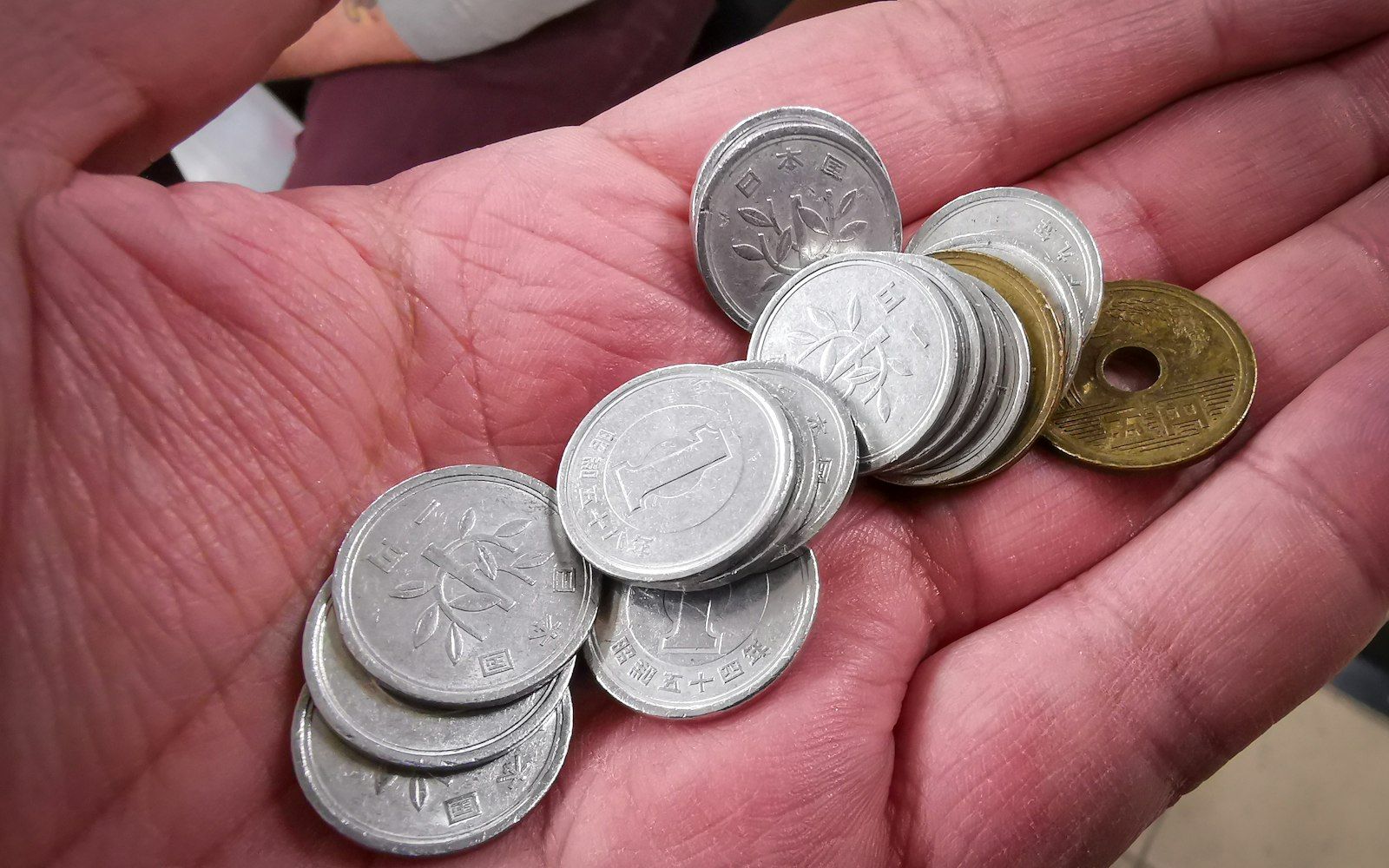
Do you need cash in Japan? The 2026 answer: in the cities, barely; on the trips this site actually recommends, yes — and the more useful question is how much, which we answer below with numbers. Money in Japan is not one decision — it’s three separate flows, and travelers who treat them as one usually pay a markup on all three. There’s what you spend at the counter (cards work in cities; cash still matters in the countryside our guides send you to), what you withdraw from ATMs, and what you pay online before you fly (rail passes, temple lodgings, tickets — all billed in yen). This guide compares the three standard setups by structure, not by brand loyalty: your home credit card, cash exchange, and a multi-currency account. And it explains the one screen where travelers lose the most money in Japan: the terminal that offers to charge you in your home currency.
Disclosure: this article contains one affiliate placement for Wise, marked as such below. It changes nothing about the comparison logic, and other providers are named where relevant. Details in our affiliate disclosure.
The three setups, compared by structure
- Your home credit card, used abroad. The simplest option, and for many trips a fine one. The structural costs to check with your issuer before flying: the foreign-transaction fee (a percentage on every purchase, charged by some issuers and not others) and the exchange rate your card network applies. You don’t control either — but they’re knowable in advance, so ask.
- Cash, exchanged at home or in Japan. Feels safe, and some cash is genuinely necessary (below). The structural cost is the exchange counter’s spread — the gap between the rate you get and the rate you see on Google — which is usually the widest of the three options, and it scales with every note you convert. Exchanging your whole budget into an envelope of yen means paying that spread on money you might not even spend.
- A multi-currency account with a card. Services built for travel money — Wise, Revolut and similar — let you hold a yen balance, converted at or near the rate you see quoted, with the conversion fee shown before you commit. The structural advantages: you pay in yen from a yen balance (so no per-purchase conversion decision), the fee is explicit upfront rather than buried in a rate, and the same card handles ATMs and online yen payments. Wise, the one we use ourselves, states its conversions use the mid-market rate — the one you see on Google — with fees shown before you pay (its own pricing page, linked below; check current fees there, since they vary by currency and amount). Revolut and others compete on the same structure — this is a category, not a single product.
Honest framing: none of these is “cheapest” in all cases — issuer fees, amounts and timing all move the math. The structural comparison is the durable part: unknown spread (counter cash) vs knowable percentage (home card) vs explicit upfront fee on a yen balance (multi-currency).
Recommended · Wise
Wise multi-currency card
We hold a yen balance on a Wise multi-currency card for Japan trips — the mid-market rate with the fee shown upfront, one card for counters, ATMs and online yen checkouts.
Get a Wise card →Affiliate link — a small commission may go to Beyond Kansai at no extra cost to you. Disclosure.
The trap with a name: Dynamic Currency Conversion
At some point in Japan a card terminal or ATM will ask: “Pay in JPY, or in your home currency?” This is Dynamic Currency Conversion (DCC) — and choosing your home currency means accepting the terminal operator’s exchange rate plus their markup, on the spot, instead of your own card’s rate. Visa’s official traveler guidance is blunt about the mechanics: merchants and ATMs must give you the choice and cannot choose for you, must display the rate and any markup, and declining DCC never affects whether the payment goes through. If the rate isn’t shown, Visa’s advice is to decline the conversion.
The one-line rule: when a machine in Japan offers your home currency, choose yen. Your card (any card — home credit card or multi-currency) then converts at its own, almost always better, terms. This single habit costs nothing to adopt and applies to every setup above.

Do you need cash in Japan? (Yes — here’s exactly where)
Cities have gone largely cashless — IC cards and credit cards cover trains, konbini and most restaurants. But this site’s itineraries leave the cities, and that’s where cash survives: rural bus fare boxes, temple and castle ticket windows, small-town restaurants, mountain-hut vending machines. Real examples from our own guides: Takeda Castle’s gate takes cash or PayPay only, the Tango coast runs on small bus fares, and the Kumano and Totsukawa interiors are the deepest cash country in Kansai. The payment-structure rule this site standardized on: write the structure, not the shop — individual stores’ register habits change, but “rural = carry yen” doesn’t.
How much cash to carry (the working numbers)
A working rule for Kansai trips: enough for a day or two of small spending — ¥5,000–10,000 per person — topped up as you go at konbini ATMs, not your whole budget in an envelope. Applied to trip shapes:
| Trip style | Cash guideline |
|---|---|
| City-only (Osaka/Kyoto), cards accepted | ¥5,000–10,000 total as a buffer, may come home with it |
| City base + 1–2 countryside day trips | ¥10,000–15,000/person, top up before each excursion |
| Rural circuit (Kumano, Totsukawa, Tango coast) | ¥10,000/person per rural day-pair, replenished at the last konbini before the mountains |
These are planning bands built from the per-day rule above, not price quotes — the point is the pattern: small notes and coins for fare boxes and ticket windows, replenished often, never a wallet-breaking wad.
ATMs: the konbini is your bank
You don’t need to hunt for an international bank branch — Japan’s foreign-card ATMs live in convenience stores. Seven Bank (the ATMs inside 7-Eleven stores) states its machines accept Visa, Mastercard, AmEx, JCB, UnionPay, Diners and the major cash networks, run 24 hours, offer an English interface (plus ten other languages), and number over 28,000 across Japan — including the airports you’ll land at (the whole arrival sequence — trains, luggage, the ATM stop — is in our KIX guide). Practical notes: your home bank may charge its own withdrawal fee on top (ask before flying); ATMs may also present the DCC screen — same rule, choose yen.

Paying online before you fly (this is where yen billing bites)
A growing share of a Japan trip is paid before departure, in yen: JR West’s online pass reservations are credit-card only, temple-lodging portals bill in yen, and timed tickets for popular sights sell out online. Two structural points:
- Your card’s foreign-transaction fee applies to every one of these — a percentage on each booking adds up across a trip’s worth of reservations.
- A yen balance sidesteps the per-purchase conversion: convert once at a rate and fee you saw upfront, then pay each yen checkout from the balance. This is the single strongest use case for the multi-currency setup — more than street spending, where any modern card does fine.
Quick FAQ
- Do I need cash in Japan? In the big cities, rarely; for countryside trips, yes — fare boxes, ticket windows and small restaurants still run on yen. Carry the ¥5,000–10,000/person buffer and top up at konbini ATMs.
- How much cash should I bring to Japan for a week? Don’t pre-load a week — load a day or two (¥5,000–10,000/person) and replenish as you go; the table above adjusts it by trip shape. Konbini ATMs make the big-envelope strategy obsolete.
- Can I use my credit card everywhere in Japan? In cities, almost; in the countryside, assume no at buses, small temples and family restaurants. And wherever you can pay by card, the FX structure applies: foreign-transaction fee + network rate on a home card, or an upfront-fee yen balance on a multi-currency card.
- Is Wise the only option? No — Revolut and other multi-currency accounts compete on the same structure. We link the one we use; compare current fees on the official pages before choosing.
- Are exchange counters ever worth it? For convenience, sometimes; structurally their spread is the least transparent of the three options. If you use one, compare its rate against the mid-market rate on your phone first.
- What’s the one rule to remember? When any terminal offers your home currency, pay in yen.
Editor’s note
This is a structural guide, not a rate table, and it makes no “cheapest” claim for any provider — fees change by currency, amount and date, so we link official pricing pages instead of quoting numbers. All three anchor sources were re-verified for this 2026-09-16 update: the mid-market-rate and upfront-fee statements against Wise’s official pricing page; the DCC mechanics (mandatory choice, rate and markup display, declining never blocks the transaction, decline-if-undisclosed advice) against Visa’s official traveler guidance; and the ATM facts (accepted brands incl. Visa/Mastercard/AmEx/JCB/UnionPay, 24-hour operation, multilingual interface, 28,000+ machines incl. airports) against Seven Bank’s official international-card page. The cash-amount table is planning guidance derived from the per-day rule, not a price survey. Wise placement is disclosed above; Revolut and other alternatives are real competitors and named as such. Cash-context examples follow our own fact-checked guides. Drafted with AI assistance and editor-verified.
Sources
- Wise pricing — official (mid-market rate, upfront fees; re-verified 2026-09-16)
- Dynamic Currency Conversion — Visa official traveler guidance (choice, rate display, declining; re-verified 2026-09-16)
- International cards service — Seven Bank official (accepted brands, 28,000+ ATMs, 24h, languages; re-verified 2026-09-16)
- Kansai WIDE Area Pass — Beyond Kansai (online purchase mechanics)
- Takeda Castle access — Beyond Kansai (cash-only gate example)