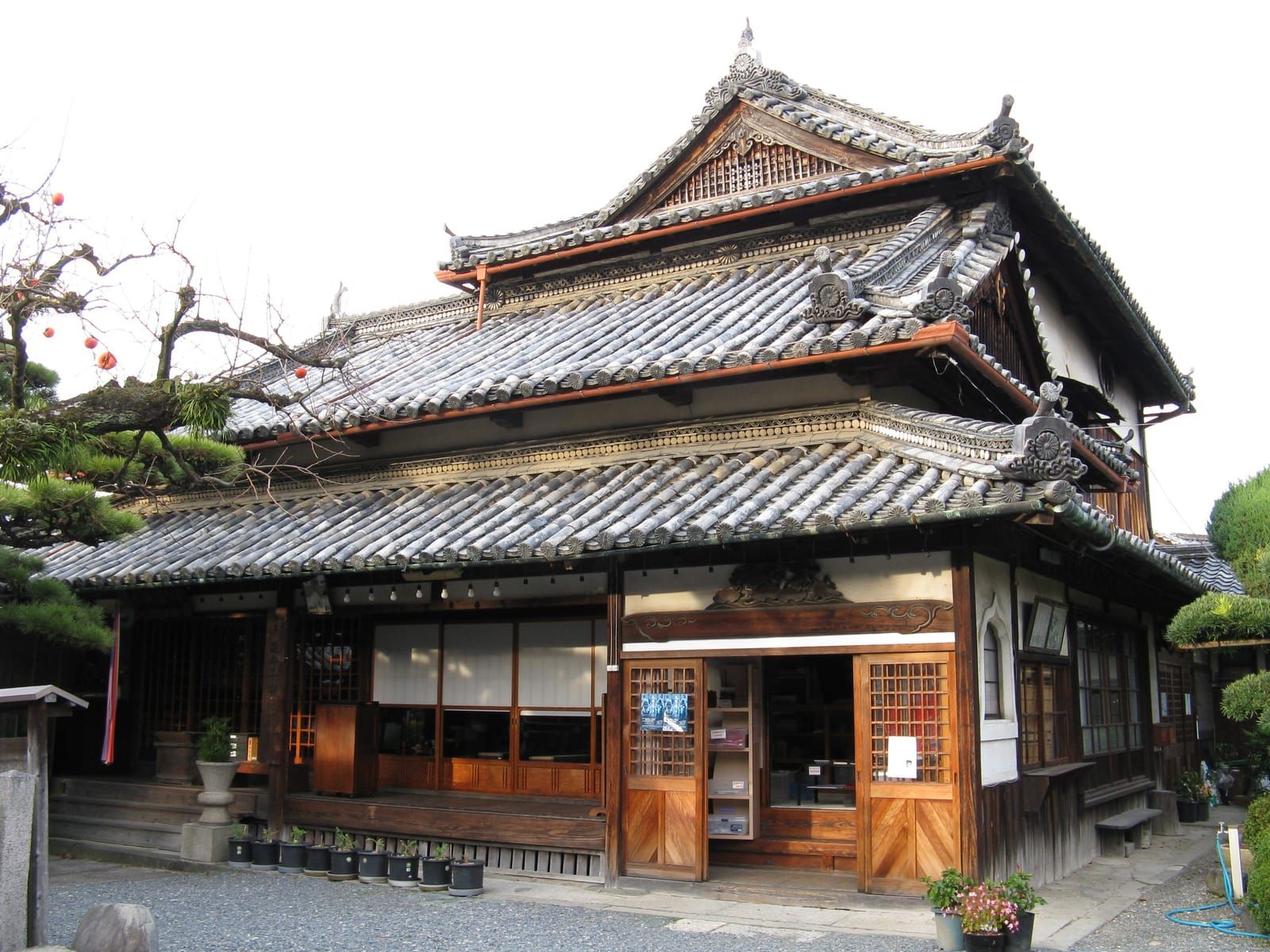
Every train to Koyasan passes a small station called Kudoyama a few stops before the cable car, and almost nobody gets off. They’re skipping one of Japan’s great hideout stories: this is the village where Sanada Masayuki and his son Yukimura — the samurai later mythologized as Japan’s greatest last-stand general — spent fourteen years in exile after backing the losing side at Sekigahara in 1600, before Yukimura slipped away to die magnificently at the siege of Osaka. It’s also where women pilgrims stopped for a thousand years when the sacred mountain above barred them. One extra hour on the way up; two stories at once.
The Sanada story, on site
- Sanada-an (Zenmyōshō-in) — a temple built on the site of the Sanada residence itself. The compact treasure hall keeps clan-related pieces; the grounds are the actual footprint of the exile. Treasure hall ¥200, 9:00–16:00 (closed year-end/New Year), per the town’s official listing.
- Kudoyama Sanada Museum — opened in 2016 to tell the three Sanada generations (Masayuki, Yukimura, Daisuke), with drama-style video rooms, a Ten Braves anime theater, and a trick-corridor nod to the residence. Adults ¥500, elementary/junior-high ¥250; about 10 minutes’ walk from Kudoyama Station.
- The village lanes between them still run at castle-town width — red Sanada rokumonsen (six-coin) banners everywhere, especially around the May Sanada festival season.
Why it resonates: Yukimura’s Kudoyama years are the quiet middle of Japan’s favorite underdog arc — the strategist waiting out a lost peace before one last impossible campaign. Standing in the temple garden where he waited makes the Osaka Castle story land differently.
 Jison-in: where women’s pilgrimages ended for a millennium — and the mountain trail begins. Photo: Naokijp / Wikimedia Commons, CC BY-SA 4.0

Jison-in — the Women’s Koyasan
At the village’s western edge sits Jison-in — founded in 816 by Kōbō Daishi as the administrative foot-temple of Koyasan, and famous as the “Women’s Koyasan” (Nyonin Kōya): for the centuries when women were barred from the mountain, this is where their pilgrimage ended. Kūkai’s own mother is said to have stayed here. It’s part of the same UNESCO “Sacred Sites and Pilgrimage Routes of the Kii Mountain Range” inscription as the mountain itself — and today it’s beloved for breast-shaped ema votives left by women praying for health.
The Chōishi-michi — walking to Koyasan the original way
Jison-in is kilometer zero of the Chōishi-michi pilgrim trail: about 180 stone markers (chōishi), one every ~109 meters, climbing all the way to the Danjo Garan on the mountain. It’s the route pilgrims walked for a thousand years before the cable car — a serious but well-marked full-day forest walk (plan roughly 6–7 hours to the top, then a shukubō night as the reward). Kudoyama is the natural staging village: museum and Sanada-an in the afternoon, early start on the stones next morning.
 The foot-temple where the mountain’s story starts. Photo: Reggaeman / Wikimedia Commons, CC BY-SA 3.0

Practical
- Getting there: Nankai Kōya line to Kudoyama Station (the same line as Koyasan — Gokurakubashi and the cable car are minutes further up). The Sanada sites cluster within a 10-minute walk of the station.
- Time needed: 1.5–2 hours for the Sanada circuit; add Jison-in for a half-day; add the Chōishi-michi for a full pilgrim day.
- Pairing: the obvious itinerary is Kudoyama morning → Koyasan afternoon → temple stay → dawn Okunoin — history at the foot, sanctity at the summit.
- Note on passes: this is Nankai territory (JR passes don’t apply); Nankai’s Koyasan ticket covers the line — see the Koyasan guide.
Quick FAQ
- Is Kudoyama worth it if I don’t know the Sanada story? The museum’s video rooms are built exactly for that — it’s an introduction, not a fan-service stop. Jison-in needs no backstory at all.
- Can I do Kudoyama + Koyasan in one day? Yes — that’s the classic pairing; give Kudoyama the morning.
- Is the Chōishi-michi hard? Long rather than technical: a full day’s steady forest climbing with perfect waymarking (a stone every ~109 m). Standard hill-walking prep applies.
- When’s the liveliest time? The town leans into its samurai identity around the May Sanada festival; autumn gives the trail its best walking weather.
- Museum in English? Displays are Japanese-first; the visual/video format carries most of the story regardless.
Editor’s note
This guide makes no personal-experience claims. The Sanada Museum’s fees (¥500/¥250), 2016 opening and station walk-time, and Sanada-an’s treasure-hall fee (¥200) and hours were checked against the Kudoyama town tourism pages and Wakayama’s official prefectural listings on 2026-07-28; Jison-in’s 816 founding, Women’s-Koyasan history and UNESCO status per the prefectural listing; the Chōishi-michi’s ~180 stones at ~109 m intervals per the same official sources. Hours and festival dates change — confirm before visiting (fees/hours are logged in our maintenance ledger for annual re-checks). Drafted with AI assistance and editor-verified.
Sources
- Kudoyama Sanada Museum — town tourism official (fees, opening; retrieved 2026-07-28) / Sanada-an — town tourism official
- Sanada-an — Wakayama Prefecture official tourism listing / Sanada Museum — prefectural listing
- Koyasan — the complete guide — Beyond Kansai (816 founding, UNESCO inscription, access)