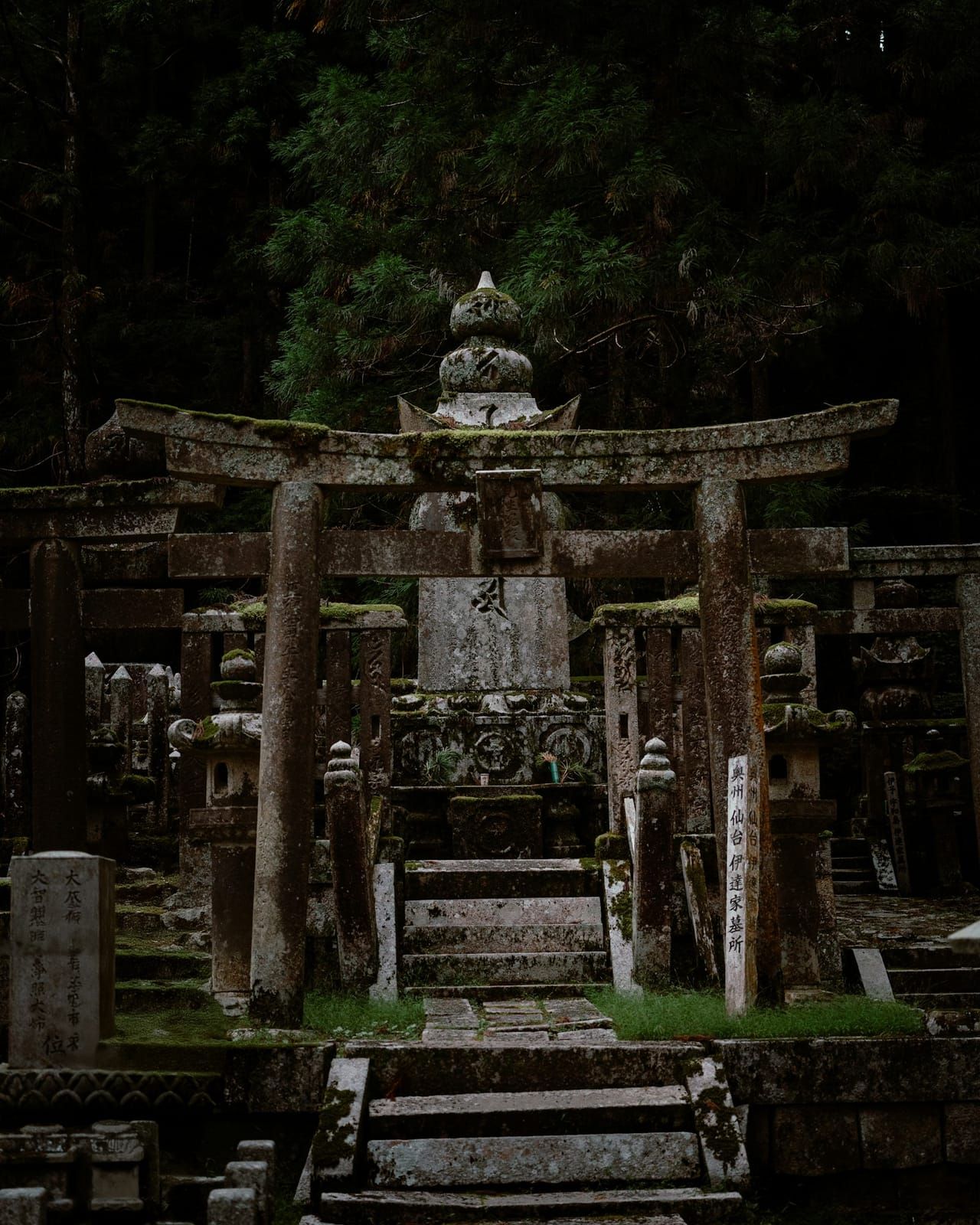
By day, Okunoin is Japan’s most extraordinary cemetery: two kilometers of moss-swallowed stupas under 500-year-old cedars, ending at the mausoleum where the faithful hold Kōbō Daishi in eternal meditation. By night it becomes something else entirely — stone lanterns glowing down an avenue of giants, tour buses long gone, your footsteps suddenly the loudest thing on the mountain. There are exactly two good ways to experience that, and both depend on decisions you make before you arrive.
Option 1 — The official night tour (the guided way)
A guided Okunoin night tour operates from Ekō-in temple, led by a monk or a local Koyasan guide, with English-language tours available. The details that matter, per the temple’s official page and the tour’s official booking site (checked 2026-07-28):
- Open to everyone — you do not need to be staying at Ekō-in (or any temple) to join, but a separate reservation is required; it is not included in accommodation plans.
- Book ahead: the tour frequently sells out from March through November. Online booking takes a couple of minutes; current times, prices and language schedule are on the official tour site.
- One operational quirk: guests of a couple of specific temples (Renge-in, Sainan-in) can’t join due to those temples’ bath/meal schedules — worth knowing when you pick your shukubō.
Walking the lantern-lit approach while a monk explains what the graves, memorials and rituals actually mean is — by broad consensus of visitors — one of the best few thousand yen you can spend in Kansai. It’s also the only sanctioned way to get context at night, when the information boards disappear into the dark.
Sleeping where the tour starts solves the whole evening’s logistics — Ekō-in is both the tour’s home temple and one of the two Koyasan shukubō bookable date-by-date on Klook (how it compares with the other temples: our shukubō comparison):
Book the temple · Klook
Ekō-in temple stay (shukubō) — Koyasan
Stay at Ekō-in itself — tatami rooms, shōjin ryōri, the daily goma fire ritual, and the night tour beginning at your own front gate. Check dates and what each plan includes.
Check availability →Affiliate link — a small commission may go to Beyond Kansai at no extra cost to you. Disclosure.

Option 2 — The dawn walk (the solo way)
The cemetery approach is a public sacred path, and the profound version of “Okunoin at midnight” for most travelers is actually Okunoin at 5 a.m. — dark when you set out, first light filtering through the cedars by the time you reach the bridge. Our Koyasan Temple Stay plan is built around exactly this: sleeping on the mountain is what makes the pre-dawn walk possible, since day-trippers physically can’t be there at that hour. Attend your temple’s morning service afterward and the whole sequence lands as one experience.
Know before you go (either option):
- The halls keep daytime hours. The Tōrōdō (Lantern Hall) and the innermost area operate on daytime schedules (travel references list roughly 8:00–16:30 summer / 8:30–16:00 winter — confirm locally on the day). At night and dawn you are walking the path, not entering the halls — that’s the point, not a loss.
- Beyond the Gobyō bridge: no photography, no food or drink — the rule applies at 5 a.m. exactly as it does at noon.
- It is genuinely dark. Lighting along the path is sparse and atmospheric, not municipal. Carry a small light for the dawn walk; watch the stone steps when damp.
- It is genuinely cold. The mountain sits at ~800 m — bring a layer even in summer, serious insulation in winter.
- Once a year, the night lights up: the Rōsoku Matsuri / Mantō Kuyōe candle memorial (August 13) fills the approach with candles in the evening — a spectacular exception to the quiet, and a crowded one; verify current-year details before planning around it.

The sequence that works
- Afternoon: arrive via the Nankai route (access details), check into your shukubō, see Kongōbuji and the Garan.
- Evening: temple dinner → night tour (booked weeks ahead in high season).
- Dawn: the quiet walk back through Okunoin — different light, different mood, zero people.
- Morning: service at your temple, breakfast, descend.
One mountain night, and you’ve seen Okunoin three ways: guided in the dark, alone at first light, and — if you like — again by day with the crowds, which after the other two feels like a different (lesser) place.
Quick FAQ
- Is it scary? Solemn, not scary. This is an active sacred site treated with reverence — the night tour’s framing helps first-timers read it correctly.
- Can I just walk in at night without the tour? The approach is a public path and the dawn walk is a well-established practice for overnight guests. Go respectfully, keep quiet, skip the inner halls (closed), and obey the bridge rules.
- Do I need to stay at Ekō-in for the tour? No — non-guests join with a reservation; note it’s not bundled into any lodging plan.
- Night tour or dawn walk? Different experiences: tour = context and lanterns; dawn = solitude and light. The overnight lets you do both.
- Kongōbuji fees for the daytime round? ¥1,000 adults / ¥300 elementary (checked against the prefectural tourism listing 2026-07-28); details in the Koyasan guide.
Editor’s note
This article makes no first-person claims — Okunoin’s night specifics are compiled from official sources. The night tour’s existence, monk/local guiding, English availability, non-guest participation with separate reservation, exclusions, and its March–November sell-out pattern were checked against Ekō-in’s official experience page and the tour’s official booking site on 2026-07-28. Lantern Hall hour ranges are from travel references, not the temple directly — treat them as indicative and confirm locally. The August 13 candle memorial and seasonal operations change year to year; verify current details before travel. Drafted with AI assistance and editor-verified.
Sources
- Experiences (Night Tour) — Ekō-in official (retrieved 2026-07-28)
- Koyasan Okunoin Night Tour — official booking site (English tours; retrieved 2026-07-28)
- Koyasan — the complete guide — Beyond Kansai (Okunoin path, bridge rules, access, fees) / Shukubō guide — Beyond Kansai
- Okunoin Tōrōdō hours — Rurubu travel reference (indicative hall hours)