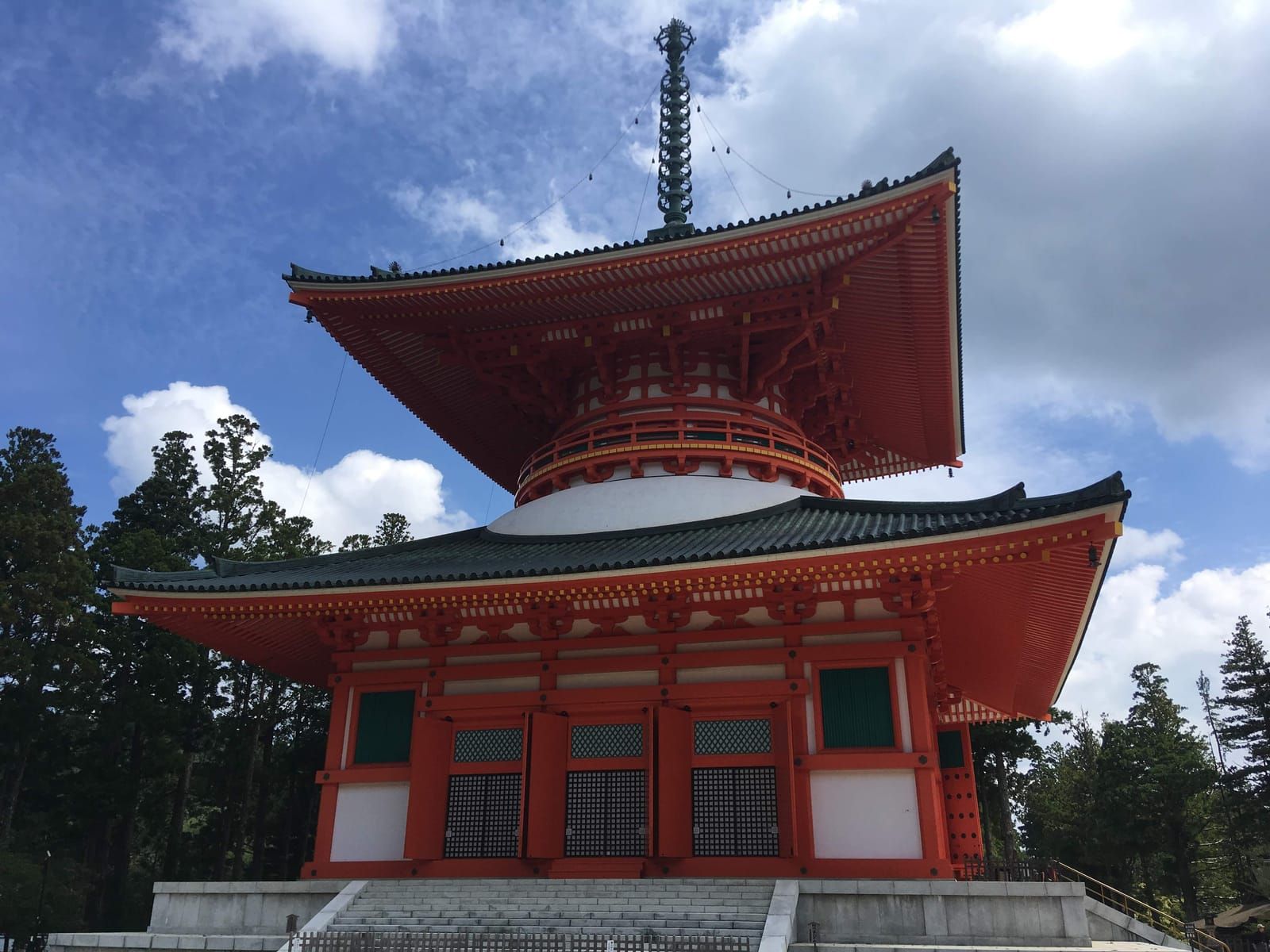
Koyasan runs on a different thermostat from the Kansai plain. The monastery town sits on a high mountain basin, and by the Japan Meteorological Agency’s own station normals (1991–2020, checked 2026-09-16), January’s average daily minimum is −3.8°C, with midwinter monthly means hovering around freezing. Nankai — the railway that runs the mountain — puts it plainly on its official travel pages: snow starts around December, sub-zero days are common, and in a long winter the snow can linger into late March. That’s precisely why winter is the connoisseur’s season here: the crowds thin to almost nothing, the cedar forest goes silent, and vermilion halls under grey-and-white skies look the way Shingon Buddhism sounds. Here’s the honest version of a Koyasan winter — including this season’s genuinely new reason to come.
This winter’s news: the Lantern Hall is back
Okunoin’s Tōrōdō — the Lantern Hall standing directly before Kōbō Daishi’s mausoleum — reopened on September 20, 2026, after a restoration that began in November 2024 as part of the 1,200th-anniversary memorial projects (per Kongōbu-ji’s official announcements). Winter 2026–27 visitors are among the first to see the hall’s restored exterior colors and cleaned interior. The approach to it is unchanged and unchangeable: the 2 km Okunoin cemetery path under the great cedars, which in winter — bare branches, occasional snow on ten thousand stone lanterns and stupas — is the most atmospheric walk in Kansai. (Our night-walk guide to Okunoin applies year-round; winter simply moves “night” earlier.)
 The Okunoin approach: two kilometers of lanterns and cedars, at their quietest in winter. Photo: lumoplank / Wikimedia Commons, CC0

Getting up the mountain in winter: take the cable car
The standing advice for December–February is simple: ride, don’t drive. Nankai’s official information warns that the roads up to Koyasan see snowfall requiring winter tires or chains, with possible night closures in the season — and the temple-lodging association’s own notices have recorded mid-December days with ~15 cm of standing snow and compulsory winter equipment on the approach roads. Meanwhile the rail route is winter-proof by design: Nankai line to Gokurakubashi, then the cable car up the final mountainside in about five minutes, arriving at a station where the local buses are already adapted to whatever the sky is doing. If you were ever going to leave the rental car out of a Kansai plan, this is the leg.
How cold does a temple night actually get?
Cold enough to plan for, not cold enough to fear — if you sort the room. The reality of sleeping in centuries-old wooden monasteries at −4°C splits in two:
- The rooms themselves are heated at the major shukubō. Ekōin’s official room specifications, for example, list air-conditioning and even floor heating across its room grades (checked 2026-09-16) — a heated tatami room while snow settles on the temple garden is one of Japan’s great winter experiences.
- Everything between the rooms is the mountain’s business. Corridors, morning-service halls at 6:00, and the walk to the bath live at something much closer to outdoor temperature — this is advice, not measurement: pack warm sleepwear and thick socks, and treat the provided padded robes as equipment rather than costume.
Dinner helps more than you’d expect: shōjin ryōri — the temples’ Buddhist vegetarian cuisine, all simmered dishes, hotpots and sesame tofu — is genuinely built for cold evenings.
 Temple dinner in the season it makes most sense. Photo: Andrea Schaffer / Wikimedia Commons, CC BY 2.0
.jpg)
Booking the winter shukubō night
Winter is the low season, which cuts both ways: availability is the year’s best, but not every temple runs every plan year-round, and heated-room standards vary — the sorting work matters more in January than in May. Our shukubō comparison guide does that sorting (six temples, booking routes in English, what each is like); it’s the intended companion to this article. If you want the one-line version: Ekōin is the established English-friendly choice with verified modern heating and the nightly Okunoin connection —
Book the temple · Klook
Ekō-in temple stay (shukubō) — Koyasan
Ekōin temple stay — English-friendly shukubō with morning services, meditation, and Okunoin at its doorstep. Check winter dates and room grades.
Check availability →Affiliate link — a small commission may go to Beyond Kansai at no extra cost to you. Disclosure.
A winter day that works
- Morning: up on the cable car, bags to the shukubō, then Danjō Garan and Kongōbu-ji while the light is flat and silver — the vermilion pagoda is at its most photogenic against winter grey (snow is a bonus, not a promise).
- Afternoon: the Okunoin path to the reopened Lantern Hall, walked slowly — allow real time; this is the point of the trip.
- Evening: shukubō check-in by late afternoon, bath, shōjin dinner, early night — then the 6:00 morning service in a cold hall, which sounds like penance and is the thing people remember for years.
Quick FAQ
- Does it snow on Koyasan? Regularly — from around December, per Nankai’s official seasonal guidance, sometimes lingering into late March. But snow cover isn’t guaranteed on any given date: plan for cold, treat snow as luck.
- How cold is it in January? JMA normals put the average daily minimum at −3.8°C with monthly means around freezing — meaningfully colder than Osaka at the same hour.
- Is winter a bad time for a temple stay? It’s arguably the best time: lowest crowds, heated rooms at the major shukubō (Ekōin lists air-con and floor heating officially), and shōjin ryōri in its natural season. The trade-offs are short days and cold corridors.
- Can I drive up in winter? Legally yes, sensibly no — official guidance warns of snow, chains/winter tires and possible night road closures. The Nankai line plus five-minute cable car exists precisely for this.
- What’s new this winter? The Okunoin Lantern Hall reopened September 20, 2026 after its two-year restoration — this is the first winter season with the restored hall open.
Editor’s note
This is a seasonal guide with no personal-experience claims. The temperature figures are JMA station normals for Koyasan (1991–2020; January mean daily minimum −3.8°C), retrieved 2026-09-16. The winter road warnings (snow from ~December, winter tires/chains, possible night closures, snow lingering into March) follow Nankai’s official seasonal guidance, with the ~15 cm December snowfall example from the Koyasan Shukubō Association’s official notices. The Lantern Hall timeline (renovation from 2024-11-18, reopening 2026-09-20, 1,200th-anniversary project) follows Kongōbu-ji’s official announcements. Ekōin’s air-conditioning and floor heating are listed on its official room pages (2026-09-16). The “cold corridors / pack warm” passages are practical advice, not measurements. Cable-car and access details follow our verified access guide. Drafted with AI assistance and editor-verified.
Sources
- Koyasan station normals — Japan Meteorological Agency official (Dec–Feb temperature normals; retrieved 2026-09-16)
- Koyasan monthly weather & clothing — Nankai official media (snow from December, winter equipment, road cautions; retrieved 2026-09-16)
- Koyasan Shukubō Association notices — official (December snow-depth and winter-tire example; retrieved 2026-09-16)
- Kongōbu-ji official announcements — Tōrōdō renovation (from 2024-11-18) and reopening (2026-09-20) (retrieved 2026-09-16)
- Ekōin rooms — official (air-conditioning, floor heating; retrieved 2026-09-16)
- Koyasan temple stay guide — Beyond Kansai (the shukubō comparison this article funnels to)