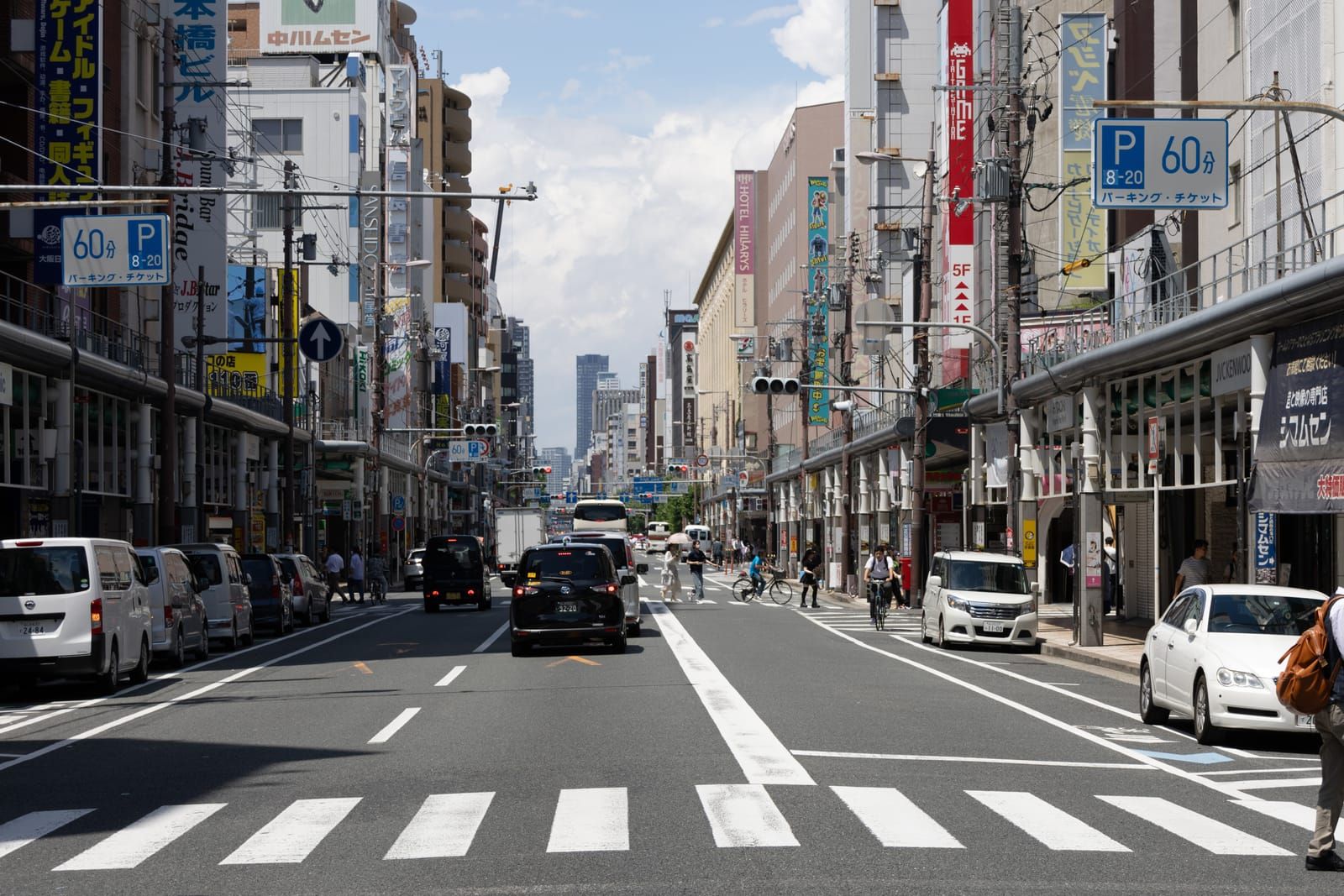
Tokyo has Akihabara; Osaka has Den Den Town — and as someone who grew up shopping this side of the country, the honest local take is that Nipponbashi’s version trades Akiba’s scale for something better: density you can walk. West Japan’s largest electronics-and-otaku district packs 150+ stores into roughly a kilometer between Namba and Ebisuchō, split between the big Sakaisuji boulevard and the parallel side street everyone calls Ota Road (“Otaku Road”). One district, one afternoon, no train transfers between shops.
(Looking specifically for the Pokémon/Nintendo/Kirby circuit? That’s a different trip — our Pokémon Pilgrimage plan routes the official character stores across the city. This guide is the district itself: the hunt, the retro, the weird.)
In Kansai on October 10, 2026? A free beach festival in Shirahama features artists behind Dragon Ball and Detective Conan theme songs — details in our Shirahama guide.
What Den Den Town is (and was)
Nipponbashi earned the nickname “Denki no Machi” — Electric Town — in the 1950s as Osaka’s go-to district for electronics and appliances. As big-box retail ate the appliance trade, the district evolved sideways: today the official tourism listing describes west Japan’s largest concentration of manga, anime, games, figures and trading-card shops, layered on top of the surviving electronics and parts stores. That layering is the charm — a floor of vintage audio gear below a floor of gunpla is a normal building here.
The anatomy of a visit
- Ota Road (west side) — the otaku spine: figure shops, doujinshi, trading cards, retro games stacked floor by floor. Browsing is vertical; check every building directory.
- Sakaisuji (east side) — the bigger storefronts and the electronics heritage.
- Mandarake Grand Chaos — the vintage-manga and out-of-print grail vault (12:00–20:00, open daily; about 6 minutes from Ebisuchō station exit 1B). If you collect anything printed or animated, budget an hour minimum.
- The official character stores — Nintendo Osaka and Pokémon Center Osaka DX sit north in Umeda/Shinsaibashi rather than in Den Den Town itself; the Kirby Café is in Shinsaibashi. Plan them as a separate leg (the plan chains everything).
 The district runs long and narrow — walk one side down, the other side back. Photo: Kansai explorer / Wikimedia Commons, CC BY 3.0

Maid cafés: the three-question rule
Maid cafés are part of the district’s fabric (typically opening late afternoon into the night). Most are honest fun; a small minority aren’t. Our verified spot entry carries the local common-sense rule — before sitting down, confirm three things: the cover/table charge, the per-hour system, and what’s actually included. Any café that answers clearly is fine; any that dodges, walk out. Photography of staff and cosplayers requires permission, always.
Practical facts (verified spot data)
- Getting there: Osaka Metro Sakaisuji line to Ebisuchō (south/Ota Road end) or Nipponbashi station (north end) — or a 15-minute walk from Namba.
- Hours rhythm: most shops run roughly 10:00–20:00 (varies by store); maid cafés typically 17:00–23:00. Mornings are dead — this is an afternoon-into-evening district.
- The area itself is free to wander — it’s a shopping street, not a ticketed attraction.
- Cash and cards: the big stores take cards; the small parts-and-retro stalls are happier with cash.
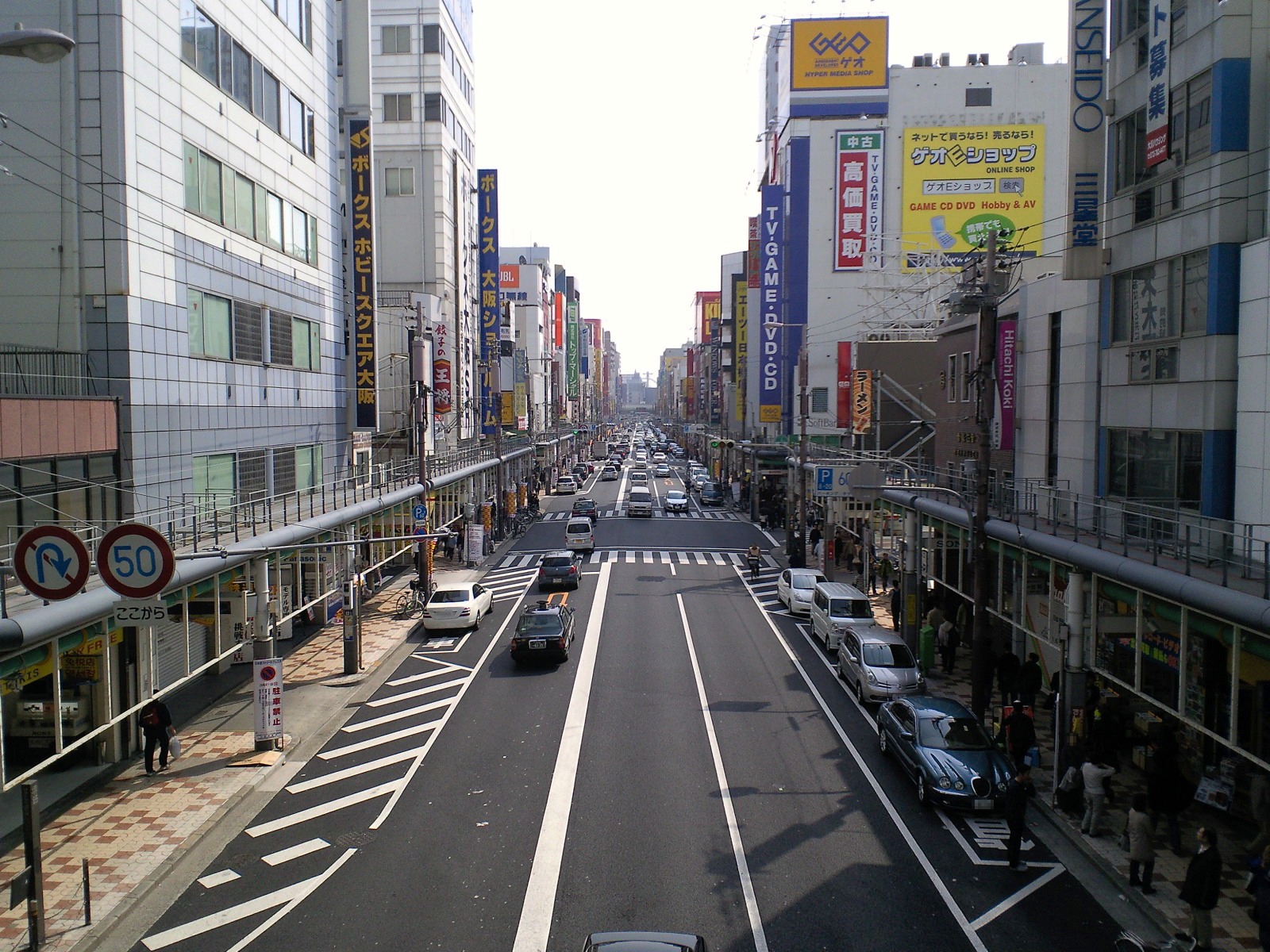 Sakaisuji: the electronics-era face of the district. Photo: Kansai explorer / Wikimedia Commons, CC BY 3.0

Den Den Town vs Akihabara (the honest comparison)
- Walkability: Den Den wins — one compact axis vs Akiba’s sprawl.
- Vintage hunting: arguably Den Den, thanks to Mandarake Grand Chaos and the used-and-retro density; Reddit’s collector threads treat it as a pilgrimage stop.
- Scale and spectacle: Akihabara, no contest — flagship buildings, event spaces, sheer volume.
- Crowds: Den Den is calmer on any given weekend — browsing feels like browsing, not queueing.
- Verdict: if you’re in Kansai, don’t “save otaku shopping for Tokyo.” The best finds are wherever the used stock is, and the used stock here is deep.
Hungry after the arcades? Want to eat where locals actually eat? We run a small-group izakaya-hopping evening in Ura-Namba, a 15-minute walk from here.
Quick FAQ
- How long do I need? A focused half-day (afternoon → dinner). Collectors: all day, easily.
- Best day? Weekdays for browsing room; weekends for atmosphere.
- Where next? Namba’s food streets are a 15-minute walk north — the natural dinner exit. For the full-recovery version, Solaniwa Onsen — the big Edo-styled onsen complex at Bentencho, a short Metro ride west — is the local post-shopping wind-down (bookable below).
- Is it kid-friendly? The game/figure floors, yes. Some Ota Road floors are 18+; signage is clear.
- Duty-free? The larger stores handle tax-free for visitors — carry your passport. And when a register offers your home currency, choose yen — why, in our money guide.
Book ahead · Klook
Solaniwa Onsen — admission (Osaka)
The Edo-styled onsen complex at Bentencho — the local post-shopping wind-down, a short Metro ride west of Den Den Town.
Check availability →Affiliate link — a small commission may go to Beyond Kansai at no extra cost to you. Disclosure.
Editor’s note
First-person remarks are area-level impressions within our editor’s stated Osaka experience range. District facts — the 150+ stores, the 1950s “Electric Town” origin, the Namba–Ebisuchō/Ota Road/Sakaisuji geography — were checked against Osaka’s official tourism listing on 2026-07-28; access, hours rhythms, the Mandarake details and the maid-café checklist come from our fact-audited spot entries (2026-07-14 audit). Individual shop hours vary and change — check store pages for anything you’re traveling specifically to see. Drafted with AI assistance and editor-verified.
Sources
- Nippombashi Den Den Town — Osaka official tourism listing (150+ stores, district history & geography; retrieved 2026-07-28)
- Mandarake Grand Chaos — official store page (location & hours)
- Den Den Town — Beyond Kansai spot entry (access, hours, maid-café checklist; audited 2026-07-14) / Mandarake Grand Chaos — spot entry
- Pokémon Pilgrimage — Beyond Kansai plan (the official-stores circuit)