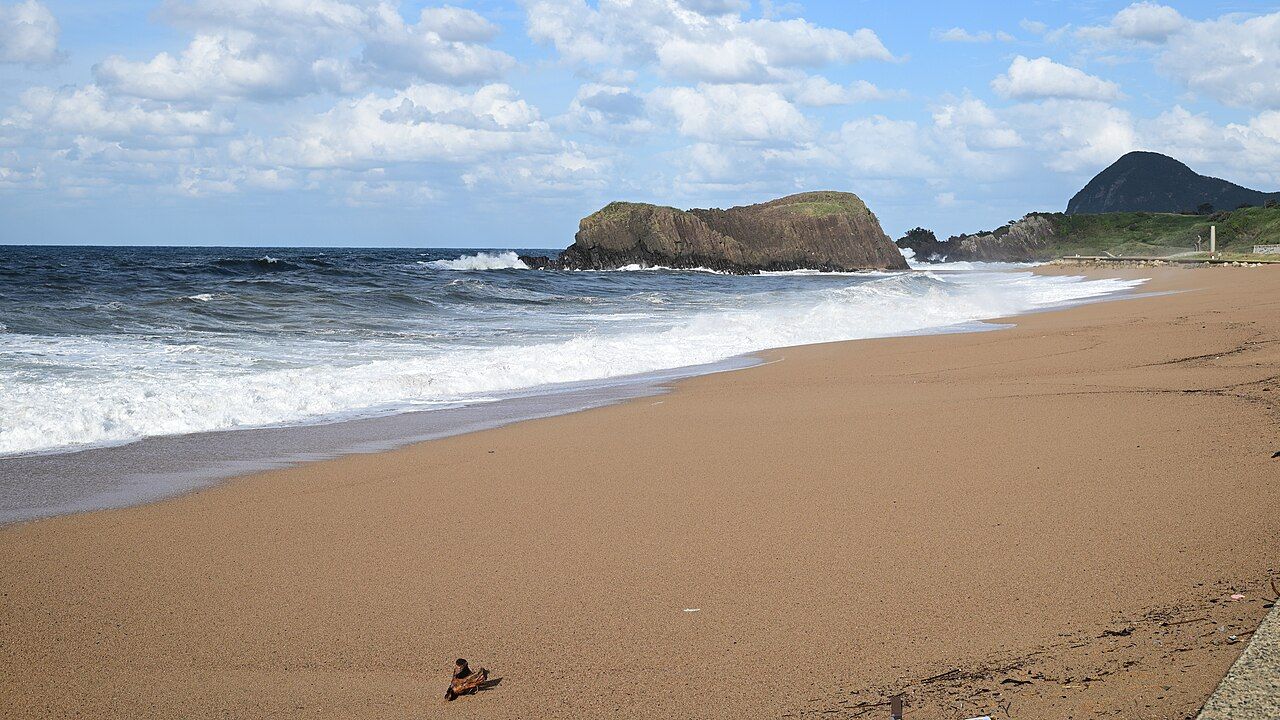
Say “Kyoto” to most foreign travelers and they picture temples, geisha districts, and the crush of Arashiyama. Almost none of them know that the same prefecture has a completely different face two hours north: a quiet coastline on the Sea of Japan with one of the country’s “Three Great Views,” a 250-year-old fishing village built half on the water, beaches whose sand literally sings, a 300-year-old silk-weaving tradition, and some of the best winter crab in Japan.
Locals brand the whole region “Kyoto by the Sea” (Umi no Kyoto) — seven municipalities spread across the Tango Peninsula: Miyazu, Ine, Kyotango, Yosano, Maizuru, Ayabe and Fukuchiyama. Its biggest selling point in an age of overtourism is blunt: hardly anyone goes. While Gion overflows, this coast stays calm.
This is a region, not a single sight, and the attractions are genuinely spread out. That’s the catch and the charm: you trade convenience for space, clean air, and an unhurried, deeply rural Japan that feels a world away from the tour buses of the south.
Amanohashidate: one of Japan’s “Three Views”
The anchor sight is Amanohashidate, a pine-covered sandbar celebrated for over a thousand years as one of Nihon Sankei — Japan’s three most scenic views, alongside Matsushima (Miyagi) and Miyajima (Hiroshima). The sandbar runs about 3.6 km across Miyazu Bay, carpeted with roughly 8,000 pine trees; you can walk it in about 45 minutes or cycle it in under 20 (inexpensive rental bikes are available near the station).
The famous local ritual is matanozoki — stand with your back to the bay, bend over, and view the sandbar upside-down, so the strip of pines appears to float and rise like a “bridge to heaven” (the literal meaning of Ama-no-hashidate). Hillside viewpoints sit at each end — Kasamatsu Park in the north (the home of matanozoki, where the sandbar resembles the kanji for “one”), and Amanohashidate View Land in the south (a small hilltop amusement park where it looks like a flying dragon). At the southern foot stands Chion-ji, a temple to the Buddha of wisdom where students pray for exam success. It’s a deep enough sight that we’ve given it a full guide — Amanohashidate — plus a dedicated access guide from Kyoto; even a couple of hours here justify the trip north.
Ine no Funaya: a village built on the water
About an hour up the coast lies Ine, the image that stops travelers mid-scroll: roughly 230 funaya (boathouses) lined up for about 5 km around the calm, horseshoe-shaped Ine Bay, their ground-floor boat garages opening straight onto the sea and living quarters above. A sightseeing boat loops the bay in about 25 minutes, many funaya run a “sea taxi,” and a number have become cafés, restaurants, and guesthouses — so you can sleep above the water where a fishing boat used to park. Ine is the emotional center of a Kyoto-by-the-Sea trip; see our dedicated guides — Staying Overnight in Ine and how to get there from Kyoto.
The Tango Coast: singing sand, a 15-million-year-old rock, and 15 beaches
Push past Amanohashidate and Ine onto the Tango Peninsula (Kyotango) and you reach the part almost no English itinerary bothers with — which is exactly why it’s worth it. Kyotango alone has 15 beaches, much of the coast protected within the San’in Kaigan UNESCO Global Geopark.
- Kotohikihama is Japan’s most famous “singing sand” (nakisuna) beach — a 1.8 km arc of pine-framed shore whose exceptionally high-quartz sand actually squeaks and “sings” underfoot. It’s a nationally designated Natural Monument and Place of Scenic Beauty, and the sand only sings when it’s dry and clean, which is why locals are fierce about keeping it litter-free.
- Tateiwa (“Standing Rock”) is a rugged ~20 m boulder of hardened magma about 15 million years old, rising straight out of Nochigahama Beach. Local legend even claims a demon is confined beneath it.
- The peninsula is also dotted with smaller coves and capes that, in summer, fill quietly with families rather than crowds.
Worth knowing: the sea up here is strikingly clean — Kotohikihama’s famous ‘singing sand’ only squeaks underfoot because the beach stays that way. In summer the Tango beaches are for swimming; in winter the same coast flips into an onsen-and-crab retreat. One region, two completely different seasons.
The towns: where to base, and what each is for
Because “Kyoto by the Sea” is really a cluster of towns, it helps to know what each offers:
- Miyazu — home to Amanohashidate and the most convenient base, with its own Amanohashidate/Miyazu Onsen and a cluster of seaside ryokan and hotels (browse Amanohashidate & Miyazu stays on Booking.com — accommodation links are monetized via Stay22; a booking may earn us a small commission at no extra cost to you. Disclosure).
- Ine — the boathouse village; best as an atmospheric overnight, not a quick stop.
- Kyotango — the wild end: beaches, singing sand, the geopark, and Taiza snow crab in winter.
- Yosano — silk country, home of the Chirimen Kaidō (Silk-Crepe Road).
- Maizuru — a historic naval port (red-brick warehouses, a different, military-history flavor).
- Ayabe & Fukuchiyama — inland gateways; Fukuchiyama sits below Mt. Ōe, heartland of Japan’s oni (demon) legends, with a dedicated oni museum.
Legends and living culture
Kyoto by the Sea is unexpectedly thick with folklore and craft — the layer that turns a scenic drive into something memorable.
- Urashima Tarō, one of Japan’s oldest fairy tales (the fisherman who rides a turtle to a dragon palace beneath the sea and returns to find lifetimes have passed), is rooted here: the Urashima Shrine, founded in 825 CE, sits just outside Ine and is dedicated to the legend.
- Motoise Kono Shrine near Amanohashidate is said to have enshrined the sun goddess Amaterasu before she was moved to Ise — earning it the name “the original Ise.”
- Tango Chirimen is a 300-year-old silk-crepe textile tradition: a finely-textured, post-dyed fabric prized for kimono and obi. On Yosano’s Silk-Crepe Road, you can still see weaving looms clattering inside historic buildings (reached via the Kyoto Tango Railway to Yosano Station — called Nodagawa until its 2015 renaming — then a short bus). It’s one of the more authentic craft experiences in Kansai.
- Inland, Mt. Ōe (Ōeyama) is the stuff of Japan’s most famous oni legends — convenient cultural depth for anyone curious about Japanese folklore.
What (and where) to eat
The sea is the larder here. Beyond the famous Taiza snow crab, look for Tango-barazushi (the region’s colorful scattered sushi, often topped with sweet-simmered mackerel flakes), Kumihama oysters farmed in Kumihama Bay, and the prized Tango torigai (large, meaty cockles). Around Amanohashidate the streets are thick with souvenir shops and seafood stalls; in Ine, your guesthouse dinner is usually the day’s highlight.
Our take (opinion): many local lodgings and roadside stops have BBQ facilities — a genuinely fun, local way to travel here is to buy fresh seafood en route and grill it yourself by the water. (Japanese-style BBQ is a more relaxed, grill-as-you-go affair than a Western cookout, so adjust expectations.)
Onsen by the sea
This is hot-spring country, too. Amanohashidate/Miyazu Onsen puts seaside ryokan within walking distance of the sandbar, and the Tango coast’s crab ryokan pair winter snow-crab feasts with a soak. If you’re extending the trip, one of Japan’s most celebrated onsen towns, Kinosaki, lies roughly two hours west along the coast (in neighboring Hyogo) — a natural onward leg.
Getting there — and the honest truth about getting around
Getting there is easy. Getting around is the real question.
From Kyoto, the Limited Express Hashidate runs directly from Kyoto Station to Amanohashidate in about 2 hours (roughly ¥4,800–5,400 one way, only 3–4 services daily, seat reservation required). From Osaka, the Limited Express Konotori connects via Fukuchiyama.
A pass note worth knowing:
- The nationwide Japan Rail Pass covers the Hashidate on the JR portion but not the Kyoto Tango Railway section near Amanohashidate.
- The JR-West Kansai WIDE Area Pass covers the Hashidate, the Kyoto Tango Railway, the Konotori from Osaka, and most regional trains — generally the better fit (full analysis; the pass is also sold on Klook — affiliate link; a small commission may go to Beyond Kansai at no extra cost to you. Disclosure).
Once you arrive, the sights are spread out:
- Bus: Tankai buses link Amanohashidate to Ine in about 60 minutes.
- Boat: sightseeing cruises and the Ine Bay boat tour cover the water portions.
- Car: the most flexible option, especially for the Tango beaches, the silk towns, inland sights, and winter travel. A common strategy is to take the train to Amanohashidate, rent a car there, and return it before the train back.
- Taxi: Amanohashidate→Ine runs roughly ¥5,000–7,000.
- There’s also a 2-day combination pass covering Kyoto Tango Railway trains, the Amanohashidate–Ine buses, the sightseeing boats, and the cablecar/chairlift.
Our take (opinion): for Amanohashidate + Ine only, train-and-bus is fine and lets you skip parking. But for the Tango beaches, the singing sand, the silk towns, or winter travel, rent a car — the freedom to follow the coast is the whole point. (Map distances deceive; the coastal roads wind, so budget more driving time than you’d expect.)
And if you’d rather do the coast with no transfers or timetable-juggling at all, guided day tours from the Kyoto side cover the Amanohashidate area with transport included — see current Amanohashidate-area tours on Viator. (Affiliate link — a small commission may go to Beyond Kansai at no extra cost to you. Disclosure.)
Suggested itineraries
- Long day trip: Kyoto → Amanohashidate (sandbar walk/cycle + a viewpoint) → bus to Ine (bay cruise) → back. Doable but rushed.
- Two days (recommended): Day 1 Amanohashidate + overnight in an Ine funaya; Day 2 the Tango coast (Kotohikihama, Tateiwa) by rental car, with a seafood lunch and a stop on Yosano’s Silk-Crepe Road.
- Winter weekend: base at a Tango crab ryokan for the snow-crab-and-onsen experience, with Amanohashidate as a side trip — or push on to Kinosaki (choosing an inn there).
When to go
- Summer: beach season — Kotohikihama, Tateiwa/Nochigahama and the Tango coves.
- Winter (Nov–Mar): snow-crab season — book a coastal ryokan for crab and onsen.
- Spring & autumn: mild, quiet, and ideal for the sandbar, Ine, and the silk towns without crowds.
Where to stay
Alongside the converted funaya guesthouses in Ine, the coast has quietly developed villas, oceanview hotels, and rural inns, plus the seaside onsen ryokan of Miyazu/Amanohashidate and the crab ryokan of the Tango Peninsula. The towns of Miyazu and Yosano have ordinary supermarkets and restaurants, so everyday meals are easy.
Quick FAQ
- How many days? A long day trip covers Amanohashidate + Ine; two days (with an Ine overnight or a Tango ryokan) is far better, and three lets you add the silk towns and beaches.
- Do I need a car? Not for Amanohashidate + Ine (train + bus works). Effectively yes for the Tango beaches, the Silk-Crepe Road, and winter trips.
- Which rail pass? The Kansai WIDE Area Pass usually fits best; the nationwide JR Pass doesn’t cover the Kyoto Tango Railway leg.
- When’s crab season? Snow crab opens November 6 and runs to around March.
- Anything for culture lovers? Urashima Shrine, Motoise Kono Shrine, Yosano’s Silk-Crepe Road, and Mt. Ōe’s oni lore.
- Can I combine it with a bigger trip? Yes — Kinosaki Onsen is about two hours west along the coast.
Editor’s note
This guide is built from researched, sourced facts. Amanohashidate’s status and dimensions, Ine’s boathouses, Kotohikihama and Tateiwa, the 15 Kyotango beaches and San’in Kaigan Geopark, the seven “Kyoto by the Sea” municipalities, the Urashima/Motoise/chirimen/oni cultural notes, the Tango food specialties, the onsen, and all access/pass details were confirmed against the sources below. The case for a car and the buy-and-grill tip are flagged as opinion. Deep-dives on Amanohashidate and on staying in Ine are separate. Partially drafted with AI assistance and editor-verified.
Sources
- Kyoto by the Sea (7 municipalities) — Localiiz / A Different Side of Kyoto — JNTO
- Amanohashidate — JNTO / Amanohashidate — japan-guide
- Ine Fishing Village — JNTO / Ine Bay Boat Tour — Tankai
- Tango coast — Another Kyoto / Tateiwa & Nochigahama — Visit Kyotango / Kotohikihama singing sand — amino-oe
- Folklore of Kyoto by the Sea — Another Kyoto / Tango Chirimen — Visit Kyotango / Urashima Tarō — Yokai.com
- Miyazu/Amanohashidate Onsen — Ikyu / Kyoto to Amanohashidate access — japan-guide / Kyoto Tango Area Pass — WILLER