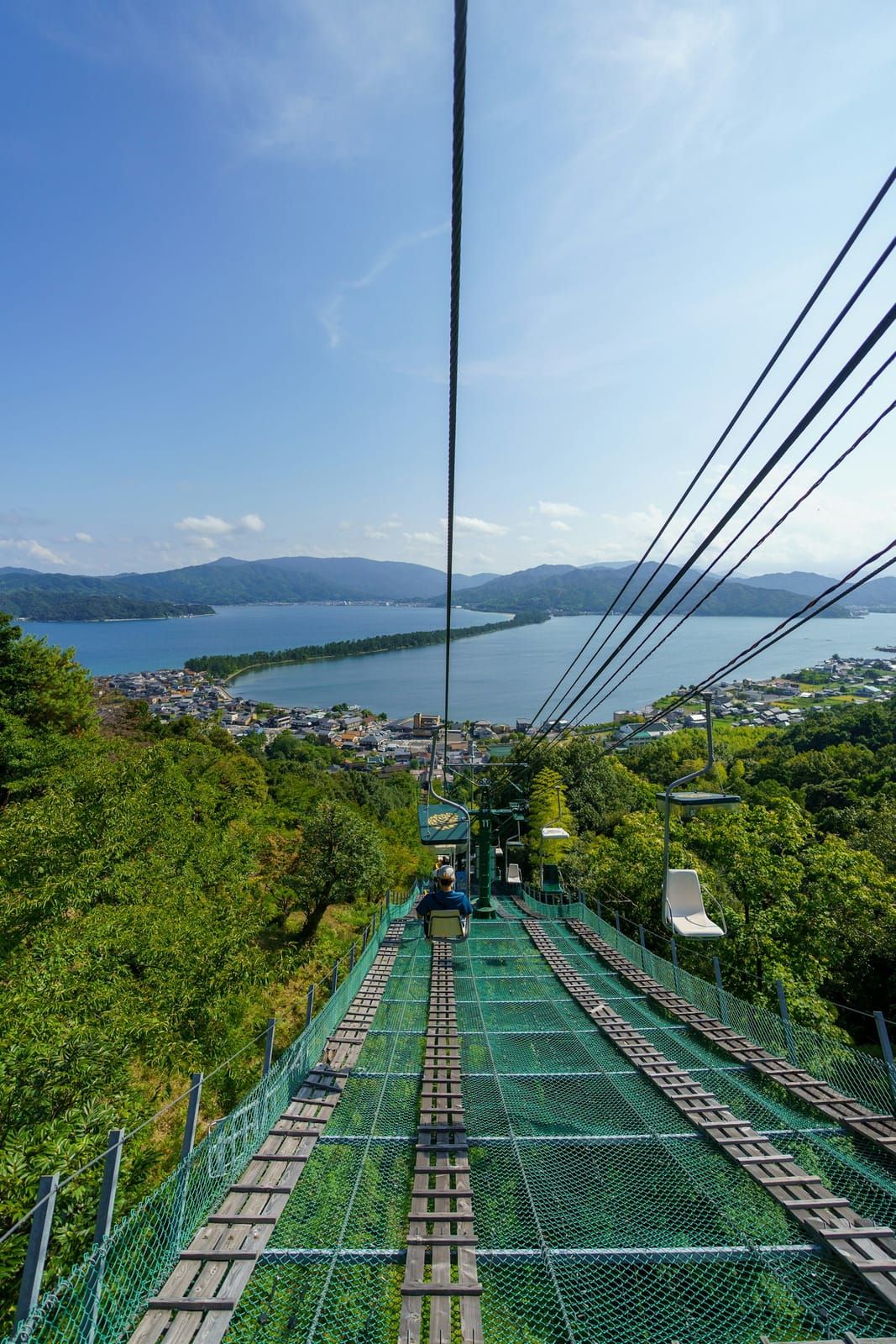
“Kyoto by the Sea” is the one part of Kyoto Prefecture most visitors never see — and the reason our overview guide exists. This is the itinerary version: three days that chain the region’s three best things — the Amanohashidate sandbar, an evening among Ine’s boathouses, and the wild Tango Peninsula coast — in an order that works with real timetables. Living on the Kansai side of this, my honest note up front: the sights are spread out, so a car makes day 3 dramatically better — but days 1–2 work fine on trains, buses and the ¥400 coastal bus.
The shape of the loop
- Day 1 — Amanohashidate: the classic sight, plus the bay at dusk.
- Day 2 — Ine: the ¥400 bus up the coast, the sightseeing boat, funaya lanes.
- Day 3 — Tango Peninsula: Tateiwa rock and the singing sand of Kotohikihama (car or seasonal buses).
Getting up from Kyoto: the Hashidate limited express (~2 h) or the ¥3,200 highway bus — full options, fares and the seasonal direct Ine bus are in our access guide; how to carry and pay these small yen fares is in our money guide. Short on days? A guided tour from Kyoto compresses the loop’s highlights into one no-transfer day — browse Kyoto-departure tours on Viator — though the three-day version below is the point of coming this far. (Affiliate link — a small commission may go to Beyond Kansai at no extra cost to you. Disclosure.)
Day 1 — Amanohashidate, done properly
The pine-covered sandbar is one of Japan’s official “Three Views,” and the standard mistake is treating it as a one-hour stop. The right version — both viewpoints, the upside-down matanozoki view, cycling the sandbar itself, and Chion-ji temple at its foot — is a genuine half-day; our Amanohashidate guide breaks down the two “ends” and how to loop them. Sleep in Miyazu or by the sandbar. The bay after the day-trippers leave is the area at its best — dinner options cluster around Miyazu’s small center (the peninsula towns go quiet early; more on provisioning below).
Day 2 — Up the coast to Ine
The Tankai local bus runs from Amanohashidate up the coast to Ine — about an hour, capped at ¥400 thanks to the zone-fare system. In Ine: the 25-minute bay cruise, then the boathouse lanes on foot. If your budget allows one special night, sleep in a funaya — the village after 5 p.m. is a different (and better) place than the day-trip version. (Editorial note: Ine is the one stop on this loop we describe strictly from research and official sources, not personal visits — our Ine pieces say the same.)
The step above the funaya, if the night is the point of the trip: Auberge Villa-KUON, a 182 m² private villa on this coast near Amanohashidate (not in Ine itself — the village is about 30 minutes away), bookable through Wabunka as a one-night experiential stay for 2–6 guests: in-villa natural hot springs, a local-ingredient dinner paired with curated local sake, and a choice of private boat fishing or a scenic cruise to Ine’s boathouses — the Day-2 sights, from the water. English-speaking host, from ¥57,000 per person; the free-cancellation window ends 32 days before arrival, so this is a book-early plan, not a last-minute one (listing checked 2026-10-02).
Premium stay · Wabunka
Auberge Villa-KUON — private seaside villa near Amanohashidate
The premium version of Day 2: Villa-KUON — private villa, in-villa onsen, dinner & sake, and a private fishing trip or Ine cruise. Books early; 32-day cancellation window.
Check dates on Wabunka →Affiliate link — a small commission may go to Beyond Kansai at no extra cost to you. Disclosure.

Day 3 — The Tango Peninsula: rocks that loom, sand that sings
This is the day most itineraries skip, and the day this loop is named for. Two anchor stops, both verified against the Kyotango Tourism Association’s official listings (2026-07-28):
- Tateiwa (立岩) — a massive columnar rock rising just off Nochigahama beach in Tango town, the signature “geo-spot” of the Kyotango coast; the beach beside it doubles as a summer swimming spot.
- Kotohikihama (琴引浜) — a 1.8 km white-sand, pine-backed beach designated a national natural monument and scenic spot, famous for its “singing sand” that squeaks underfoot when clean and dry. It’s listed among Japan’s 100 selections for soundscapes, shores and pine groves — and it’s known as the world’s first smoke-free beach, part of a community effort that keeps the sand clean enough to sing. If the weather doesn’t cooperate, the Singing Sand Culture Hall (鳴き砂文化館) nearby lets you hear it indoors regardless.
- Winter variant: swap beach time for the peninsula’s cold-season identity — crab. The fishing port of Taiza is the local name to know; winter crab courses at the area’s inns book out far ahead, so check operators and availability well before you travel.
Moving around day 3: rental car from Amanohashidate is the flexible answer (my area-level experience: coastal distances here always take longer than the map suggests, and the detours are the point). Car-free, it’s doable but slower — local buses serve the coast on the same capped-fare system; check Tankai’s current timetables and plan around fewer departures.
Provisioning tip: the towns of Miyazu and Yosano have the area’s supermarkets and eateries — stock up there if you’re self-catering at a villa or planning a beach day; don’t count on shops at the beaches themselves.

Quick FAQ
- Can I do this loop without a car? Days 1–2 comfortably (train + ¥400 bus). Day 3 is possible by bus but slow — a one-day rental from Amanohashidate is the pragmatic middle ground.
- Which night where? Night 1 Miyazu/Amanohashidate, night 2 Ine (funaya) — or collapse to 2 days by dropping the peninsula, which is exactly what most people regret.
- When does the sand “sing”? When it’s clean and dry — better odds outside of wet weather; the Culture Hall demonstrates it year-round.
- Is winter worth it? Different trip, same loop: fewer crowds, moodier coast, and crab season at Taiza’s inns (book early).
- Does the Kansai WIDE Area Pass cover this? The JR portion of the approach only — the Tango Railway stretch and local buses are separate; see the access guide for the split.
Editor’s note
Itinerary structure and transport facts follow our fact-checked Amanohashidate and Ine access guides (fares and the ¥400 bus cap verified against operator pages on 2026-07-27). Tateiwa/Nochigahama and Kotohikihama facts — the 1.8 km beach, national natural monument status, singing sand, smoke-free designation, and the Culture Hall — were checked against the Kyotango Tourism Association’s official listings on 2026-07-28. First-person remarks in this piece are area-level impressions from living in Kansai (per our editorial policy); Ine itself we have not visited, and its sections rely on sourced reporting, as our Ine articles state. Taiza crab seasons and bus timetables change — confirm current operations before travel. Drafted with AI assistance and editor-verified.
Sources
- Kotohikihama — Kyotango Tourism Association official (retrieved 2026-07-28) / Singing Sand Culture Hall — official
- Tateiwa & Nochigahama beach — Kyotango Tourism Association official
- Amanohashidate — Beyond Kansai (both viewpoints & sandbar cycling) / Ine access guide — Beyond Kansai (fares, ¥400 bus, seasonal direct bus) / Staying overnight in Ine — Beyond Kansai
- Auberge Villa-KUON — Wabunka listing (villa, inclusions, 32-day cancellation; retrieved 2026-10-02)