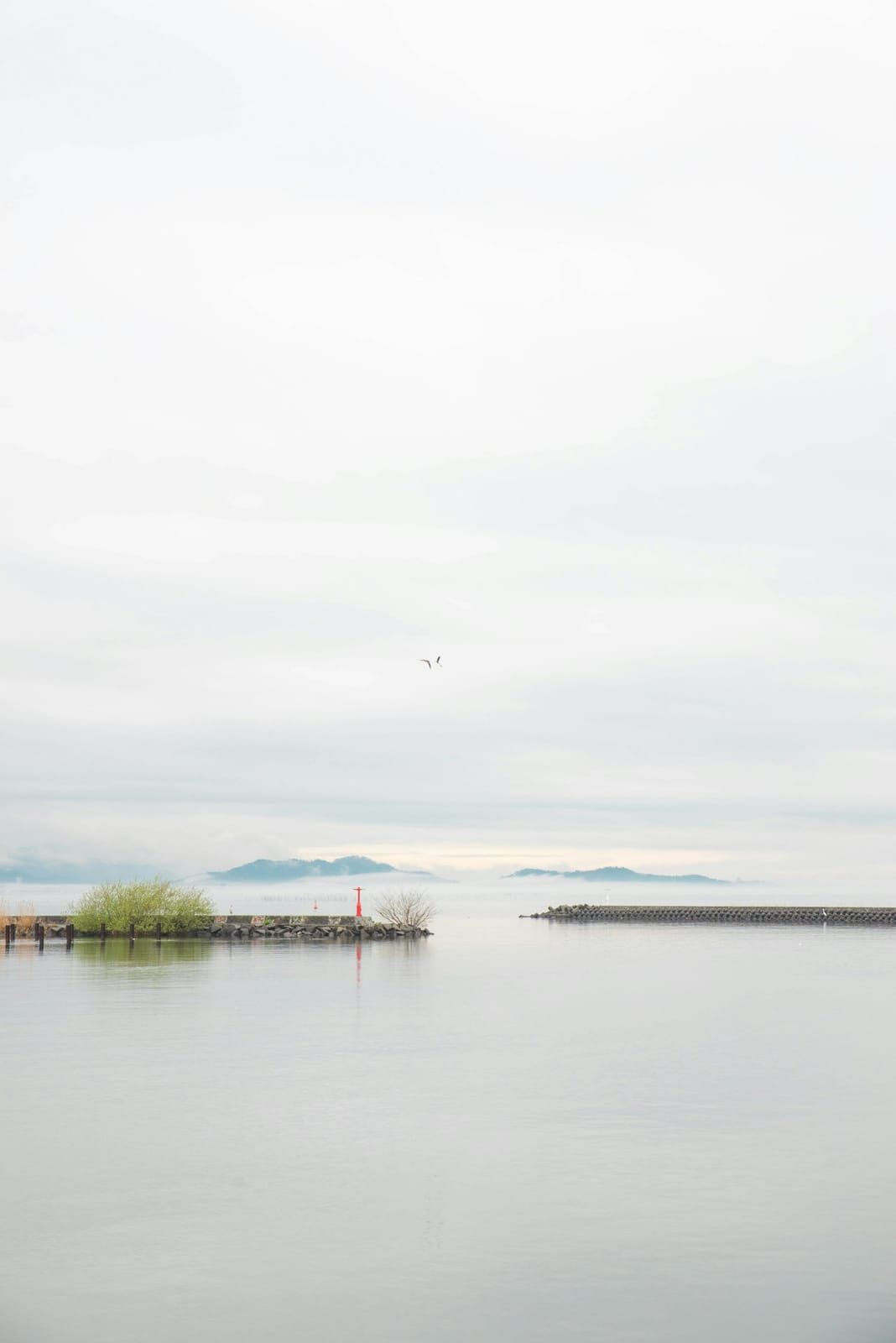
Shiga has a marketing problem and a traveler’s opportunity. The prefecture wraps Japan’s largest lake — the official tourism bureau leads with exactly that — and its western shore starts, in the bureau’s own phrase, “only 9 minutes from Kyoto.” Yet almost every itinerary treats it as scenery from a train window between Kyoto and Nagoya. This hub is the case for stopping: a National Treasure castle, a Meiji glass town, a World Heritage mountain monastery, and a lake big enough to have its own cycling pilgrimage.
Orientation: one lake, four corners
Lake Biwa organizes the prefecture. Reading the shoreline clockwise from the Kyoto side:
- Ōtsu (southwest) — the gateway; JR from Kyoto in minutes. Above it rises Mt. Hiei and Enryakuji, the World Heritage monastery that shaped Japanese Buddhism (and terrified warlords) for centuries.
- Hikone (east) — the castle town. Hikone Castle is a National Treasure — one of the handful of original-keep castles at the top of Japan’s designation system, with its Edo-period keep intact above the lake.
- Nagahama (northeast) — the glass-quarter day trip we cover in depth: Kurokabe Square and the Kaiyodo figure museum.
- The sacred north — Chikubu Island, the lake’s temple-island, reached by ferry from the northern ports; the bureau frames it as the lake’s sacred jewel.

The lake itself: Biwaichi
Shiga’s homegrown adventure is the Biwaichi — the roughly 200 km cycling circuit of the entire lake, promoted by the prefecture as a flagship experience with rental bikes, signed routes and rider-friendly lodgings. You don’t need to ride all of it: the northern shore sections deliver the best water-and-mountain scenery for a half-day taster. (Serious riders make it a 2-day loop; e-bikes have made the “1泊2日” version broadly accessible.)
A realistic Shiga plan
- Half day (from Kyoto): Ōtsu lakefront + Miidera or the Hiei cable up to Enryakuji — the closest World Heritage site almost no Kyoto visitor sees.
- Full day: the eastern-shore double: Hikone Castle in the morning, Nagahama’s Kurokabe quarter (glass workshops + the Kaiyodo figure museum) in the afternoon — the two towns are minutes apart on the same JR line.
- Two days: add the north — Chikubu Island by ferry, or a Biwaichi segment by rental bike, before looping back.
- Rainy-day / family swap: the Lake Biwa Museum on the southern shore is the lake’s natural-history deep-dive — a solid half-day when the weather turns (tickets below).
- Car-free guided day: the western shore’s famous sights — Shirahige Shrine’s torii standing in the lake, the floating Ukimido hall, Omi-Hachiman’s canal streets — sit off the rail spine this guide runs on; the guided tour below covers exactly that gap.
- Rail notes: the JR corridor (Kyoto→Ōtsu→Hikone→Nagahama) does all of the above without a car; see our pass comparison — for single day trips, plain IC fares usually win.
Book ahead · Klook
Lake Biwa Museum — admission
The lake’s natural-history deep-dive on the southern shore — the rainy-day and family swap.
Check availability →Affiliate link — a small commission may go to Beyond Kansai at no extra cost to you. Disclosure.
Book ahead · Klook
Lake Biwa west shore — one-day guided tour
Shirahige Shrine’s lake torii, the floating Ukimido and Omi-Hachiman’s canals in one car-free day from Osaka/Kyoto — the west shore this guide’s rail spine can’t reach.
Check availability →Affiliate link — a small commission may go to Beyond Kansai at no extra cost to you. Disclosure.
 Nagahama’s 1900 bank-turned-glass-museum — the east shore’s second act. Photo: 663highland / Wikimedia Commons, CC BY 2.5

Why bother, honestly?
Because Shiga is what the famous places were before the crowds: original buildings, working towns, space to think. A National Treasure castle you can climb inside without a queue, a World Heritage monastery in actual mountain silence, and craft quarters where the shopkeeper has time to talk. If this site has a thesis — the repeat visitor’s Kansai — Shiga is its purest expression.
Quick FAQ
- Is it really that close? Ōtsu is minutes from Kyoto by JR (the bureau’s “9 minutes” framing); Hikone and Nagahama are under an hour up the same line.
- Castle: Hikone or Himeji? Both are original-keep National Treasures. Himeji is grander; Hikone is calmer, lakeside, and pairs with Nagahama. Repeat visitors tend to prefer the Hikone day.
- Where does Samegai fit? The famous water-blossom stream village sits in the hills near Maibara — a summer-season add-on — our Samegai guide covers the stream village in full.
- Best season? Every season works; cherry-blossom moats at Hikone (spring) and clear northern-lake light (autumn) are the standouts. Biwaichi riding is best outside midsummer heat.
- One stop only? Nagahama — the full day-trip guide has the plan.
Editor’s note
This hub makes no personal-experience claims. The “Japan’s largest lake” framing, Hikone Castle’s National Treasure status, Enryakuji’s World Heritage listing, the ~200 km Biwaichi circuit and the “9 minutes from Kyoto” positioning were checked against the official Lake Biwa/Shiga tourism bureau site on 2026-07-28; Nagahama and Kaiyodo facts follow our verified day-trip guide and spot entry. Ferry schedules, cable-car seasons and castle hours change — confirm on official pages before travel. Drafted with AI assistance and editor-verified.
Sources
- Biwako Visitors Bureau — official Shiga tourism site (largest lake, National Treasure Hikone, World Heritage Enryakuji, Biwaichi; retrieved 2026-07-28)
- Hikone Castle — official site / Enryakuji — official site
- Nagahama & Kurokabe Square — Beyond Kansai (verified day-trip guide) / Kaiyodo Figure Museum — spot entry
- JR pass comparison — Beyond Kansai